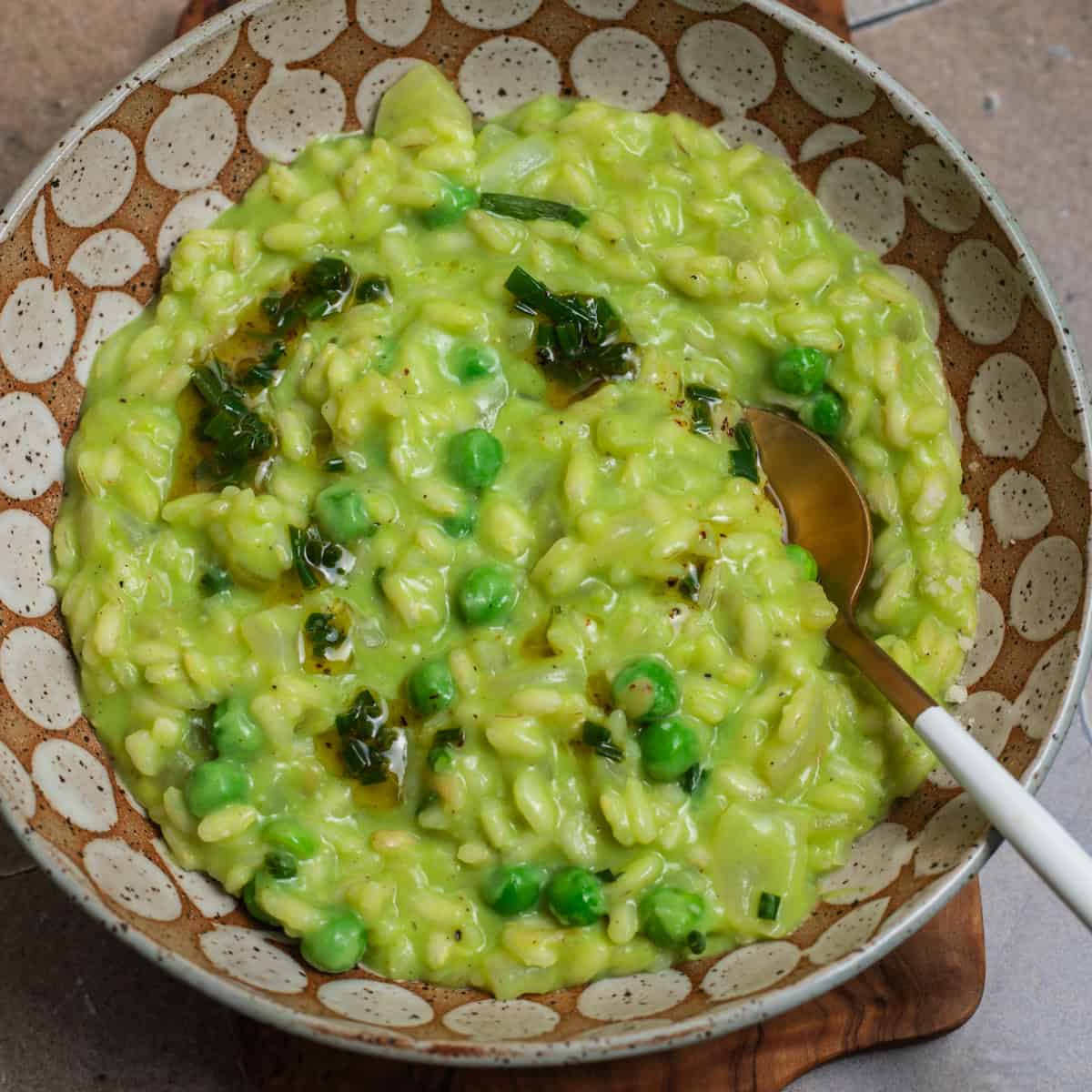
This gorgeous pea risotto is the perfect way to celebrate spring. Risotto rice is toasted in a pan with softly cooked onion and brown butter, then gently stirred with stock until cooked through. A simple pea puree and a handful of cheese are folded in, yielding a comforting, creamy consistency. With a few key techniques, you’ll learn how to make a restaurant-worthy risotto with the perfect texture and flavor.
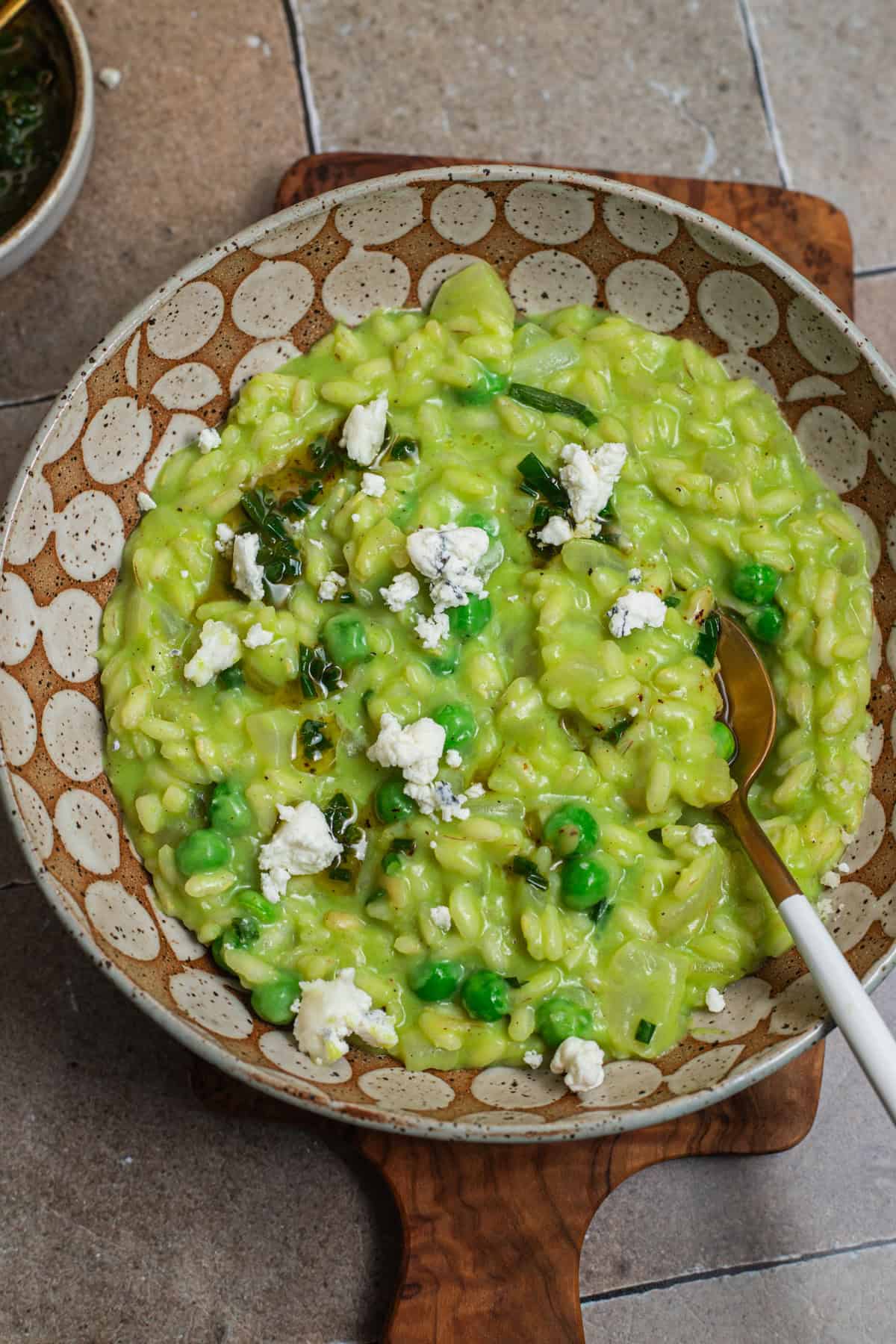
Sometimes, the way to determine whether a recipe is worth publishing is how good the leftovers are. And I have to say, I’ve been enjoying this pretty little vegetarian risotto for the last couple of weeks without a complaint.
Each bite reveals a mildly sweet, grassy flavor from the peas, alongside the salty, savory notes of the pecorino-romano and a bit of depth from the chive brown butter. Though it’s delicious on its own, you can easily supplement with simple roasted asparagus or, for added protein, shrimp scampi, salmon meuniere, or a dollop of homemade ricotta.
👩🏽🍳 Cook’s Notes for Success
risotto can be tricky…this recipe isn’t 🙂
Risotto can sometimes be less than ideal: gluey and dry, bland and flavorless, or even gritty and chalky. I’ve developed this recipe to minimize these issues!
- Toasting the rice emits a nutty aroma, and using a wide pan allows for more even liquid absorption.
- A quick homemade pea puree serves as a buffer, ensuring a creamy texture without a hint of cream.
- For the perfect consistency (all’onda), ensure the risotto is a little runnier than you’d like, as it’ll continue to thicken off the heat.
- Finishing with a drizzle of chive brown butter keeps things interesting! If you like, I recommend a bit of goat cheese for a little funk, too.
Ingredient Notes
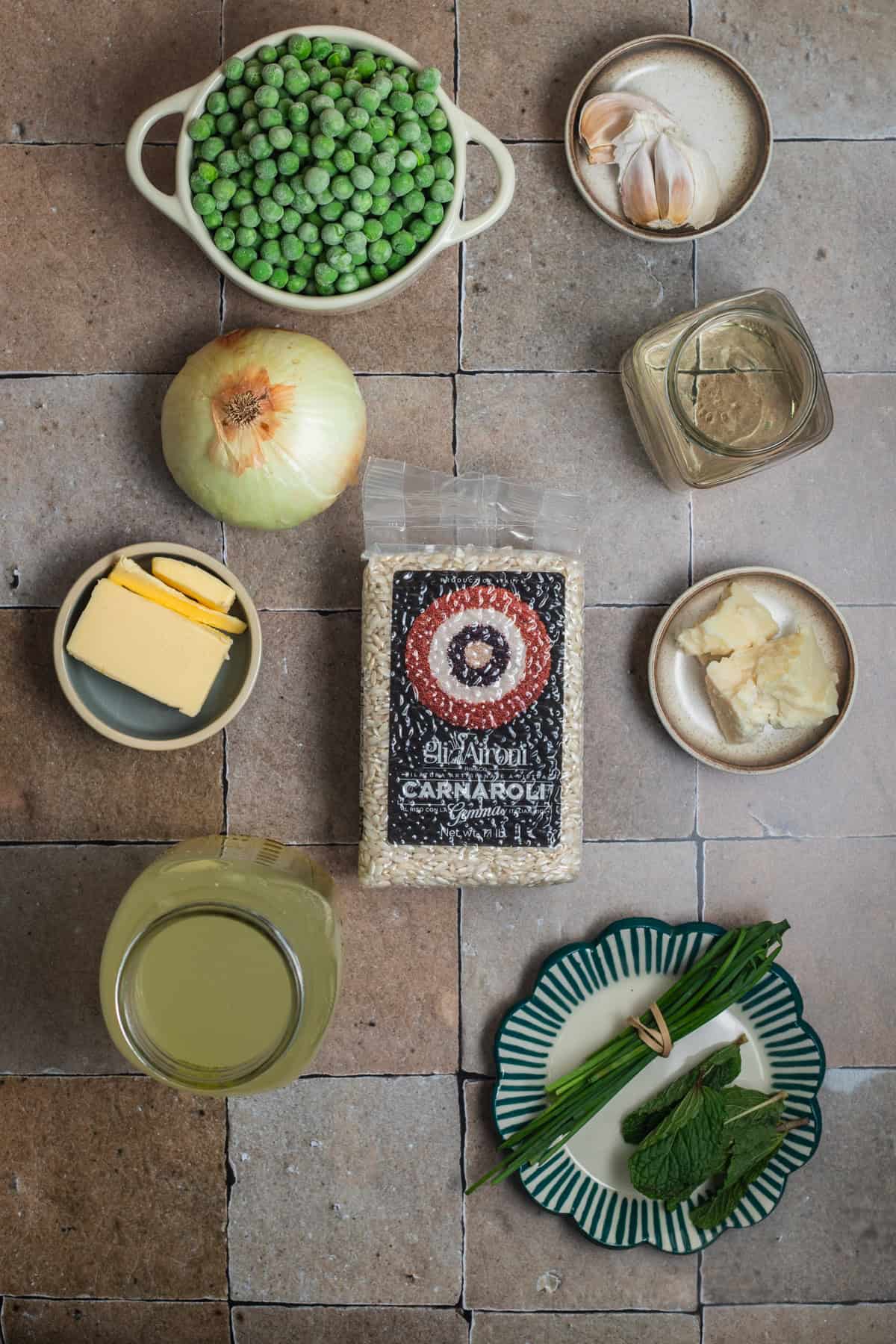
- Peas: You can use fresh or frozen shelled peas here. Frozen peas will take just a few seconds to blanch, while fresh ones can take a couple of minutes.
- White Wine: Use a crisp, dry white wine, like Pinot Grigio, Sauvignon Blanc, or Chardonnay.
- Pecorino Romano: I prefer the mild funkiness of pecorino to that of parmigiano-reggiano, as I think it offers a better balance to the sweetness of the peas. But you can use Parmigiano if that’s all you have!
- Rice: If you can find them, I recommend Carnaroli or Vialone Nano rice for the best texture. Arborio rice will work too, but Carnaroli has a higher starch content (meaning more creamy) and tends to keep its shape a little better.
For a full list of ingredients and their quantities, please refer to the recipe card.
How to Achieve the Right Consistency
All’onda in Italian means “wavy,” and refers to the traditional consistency of risotto. The liquid should be creamy but not too thick or goopy, so that if you poured some on a plate, it would move like a wave.
- If the rice is a bit too thick, mix in a little more broth before serving.
- The rice should be soft and cooked through, with a slight chew in the center. If it tastes gritty, it’s likely undercooked. If it’s mushy, it’s overcooked.
- Mantecatura is a technique where added fat produces that lovely, starchy emulsion you know and love. Here, the pecorino-romano does the heavy lifting, so don’t skip it!
TIP: If your rice is just barely undercooked, I recommend putting the lid on the pan and letting it steam off the heat for a few minutes to finish cooking through.
How to Make This Recipe
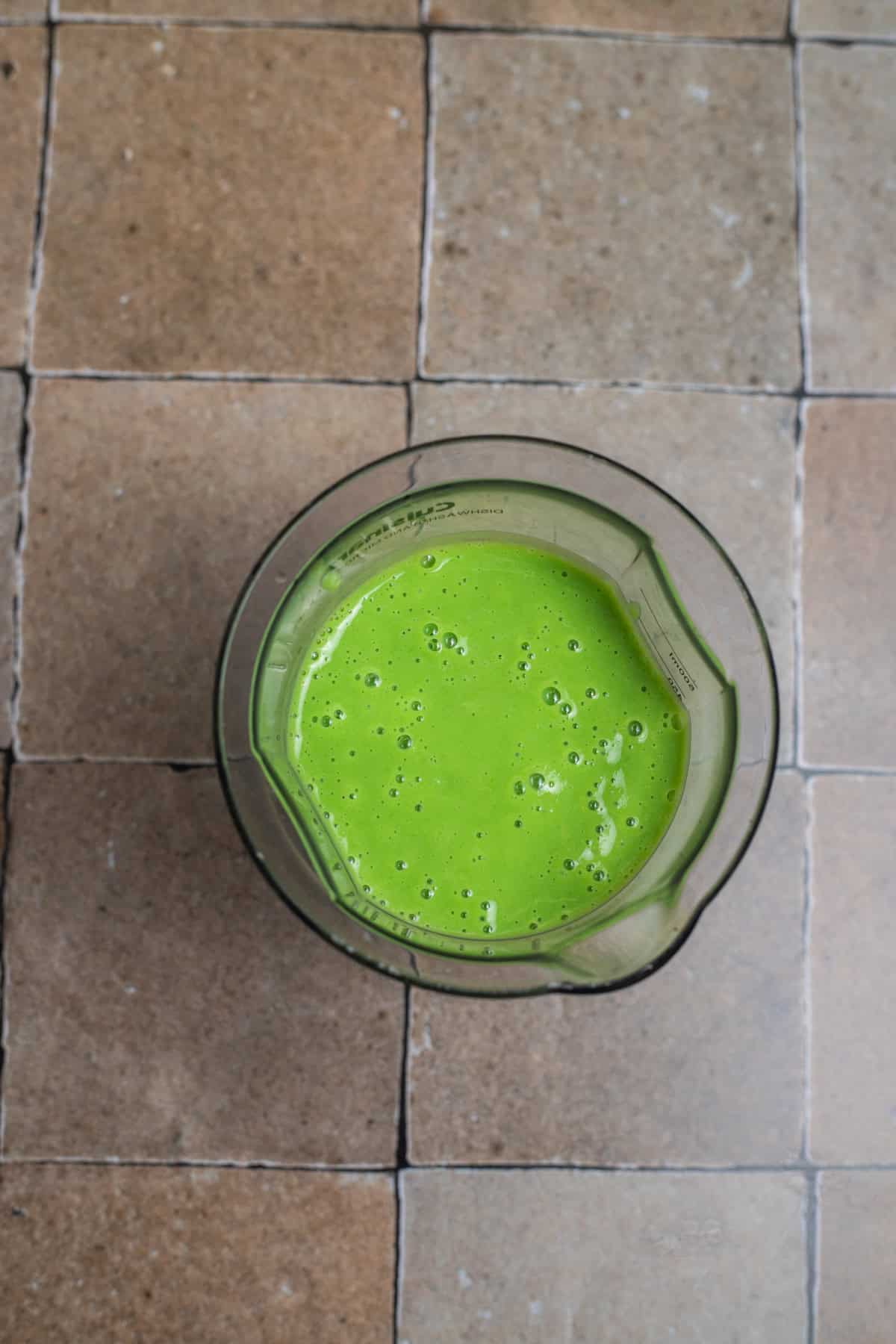
Step 1 – Bring a medium pot of water to a boil.
Add the peas, and blanch until bright green, then drain and immediately plunge into an ice bath.
Transfer peas to a blender and blend until smooth with a bit of water. Set aside.
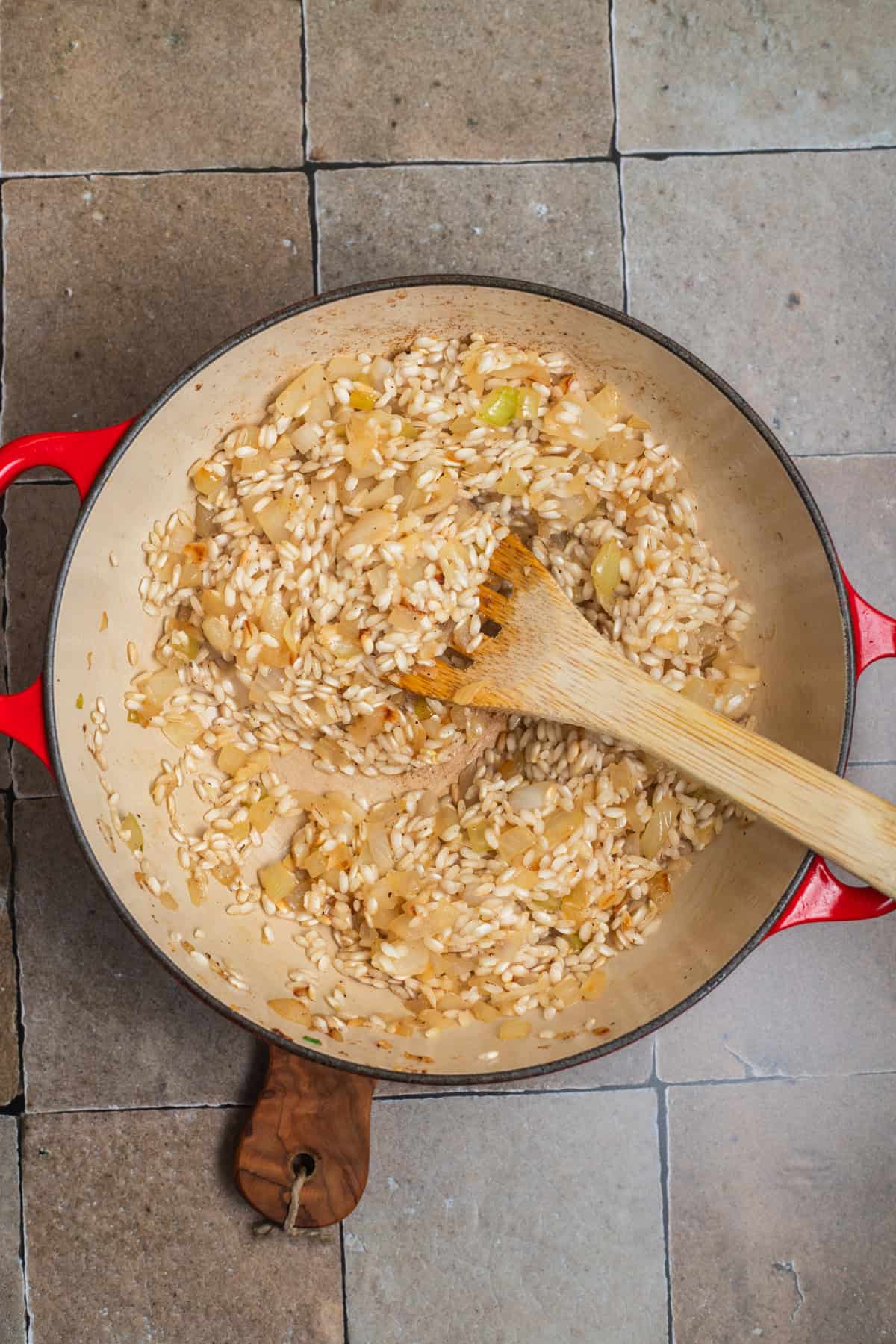
Step 2 – Meanwhile, brown butter (try browning my homemade cultured butter for even more flavor!) in a medium skillet. Immediately remove from the heat, then transfer half the butter to a bowl with chives.
Set aside the chive brown butter. Still off the heat, add the onion and garlic and saute in the butter until nice and soft. Add the risotto and toast for a couple of minutes.
TIP: Fresh and frozen peas will have a different moisture content. I always like to start with less water while blending, and add more as needed, to get the smoothest consistency.
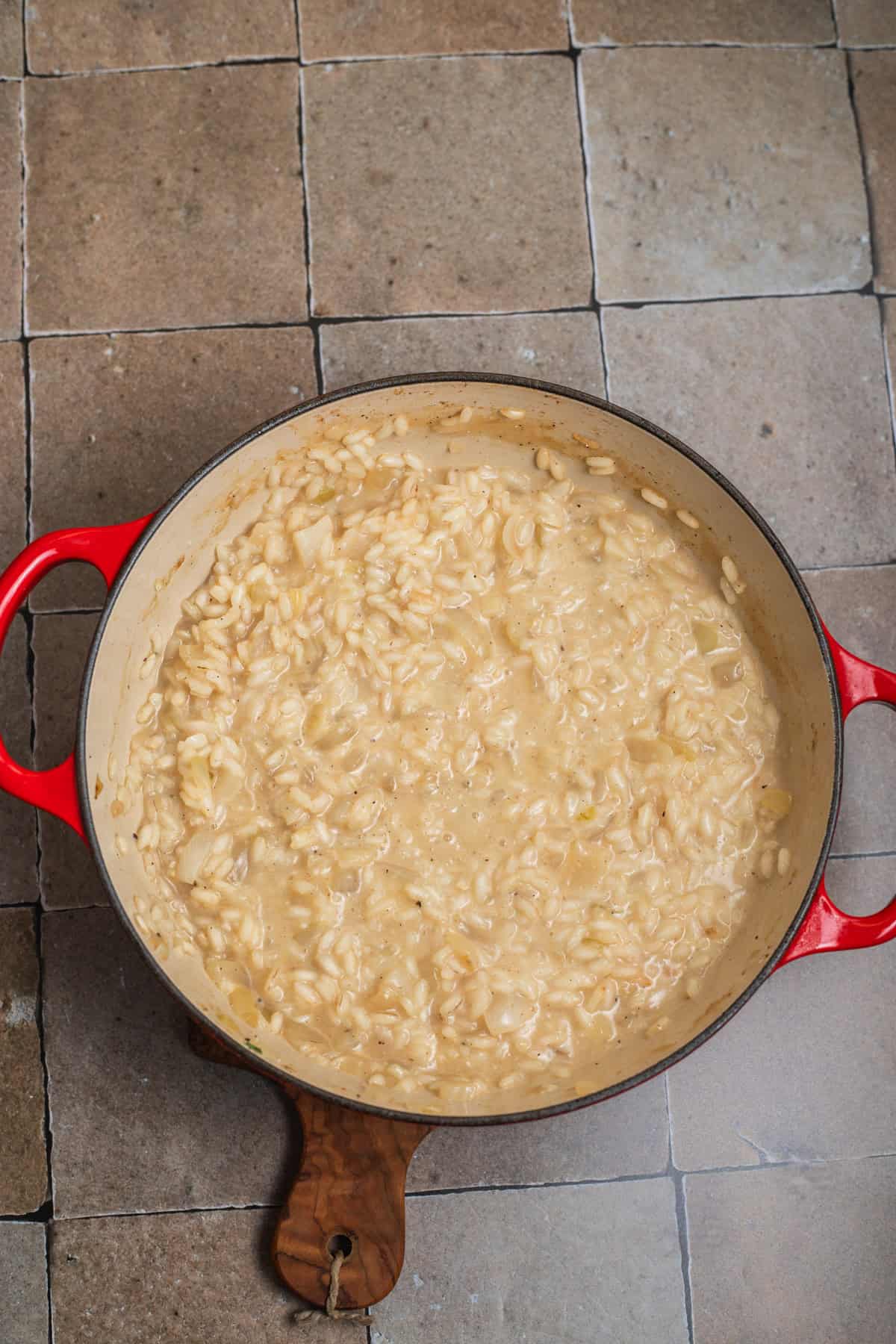
Step 3 – Deglaze the rice with wine. Bring a pot of broth to a simmer, and add a ladleful of broth. Stir vigorously, every 30 seconds to a minute, to help the rice release its starch and cook through.
When the broth is dry, you’ll continue adding a ladle of broth, stirring, and repeating.
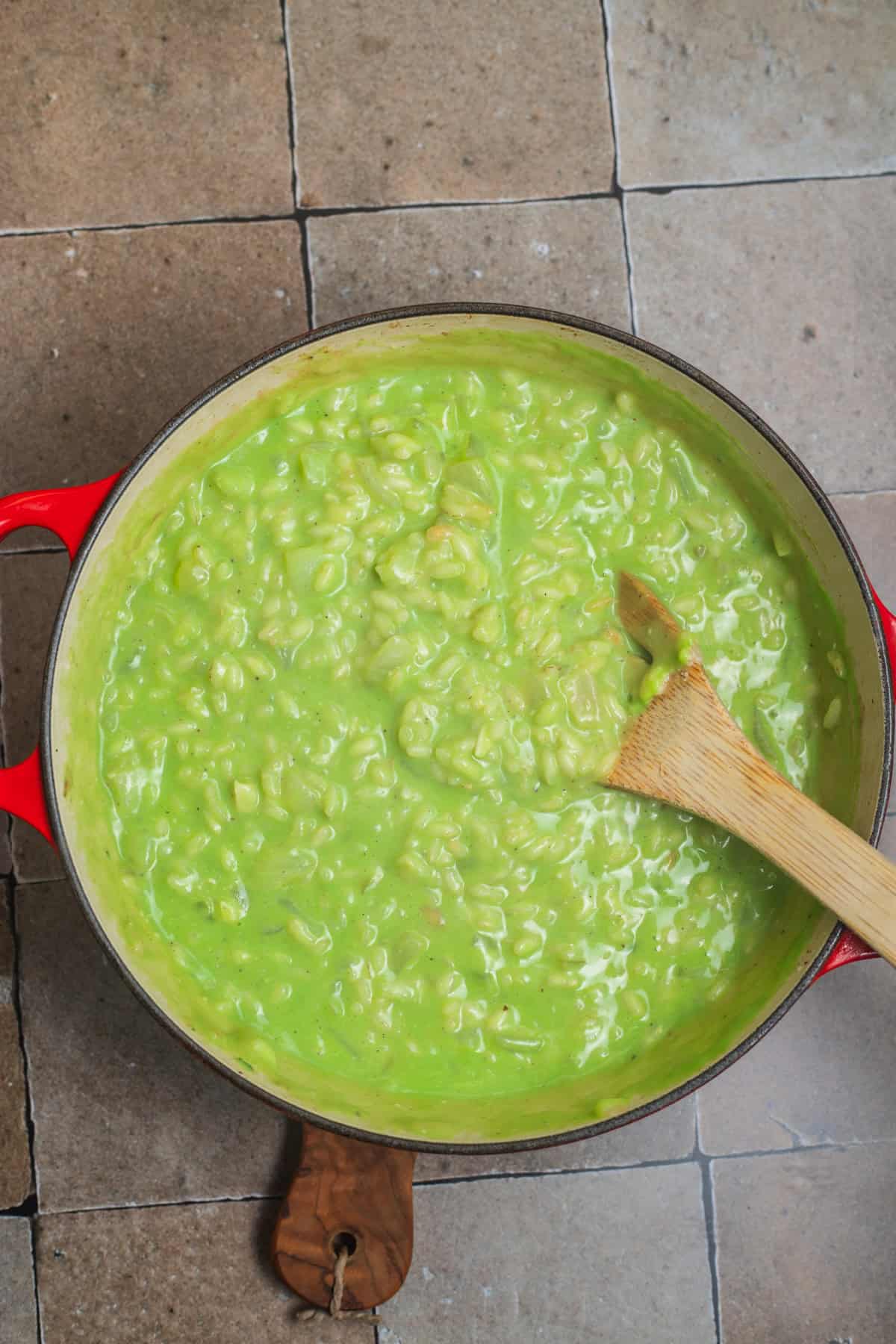
Step 4 – After about 16 – 20 minutes, the risotto should be al dente and you will have used up all of the broth. Stir in the cheese, pea puree, and season generously.
Serve immediately with a drizzle of the brown butter and enjoy!
Recipe FAQs
Made from rice, risotto is usually gluten-free, but you should always double check. Look for a package with the label ‘gluten-free’ and check for any cross-contamination.
Unfortunately, this recipe really benefits from the brown butter and pecorino cheese, so it’s vegetarian but not vegan-friendly.
Yes! Use 1 teaspoon of white wine vinegar or apple cider vinegar; just skip the deglazing step and stir in the vinegar at the end.
Did you try this recipe?
I would love to hear your feedback! Be sure to rate the recipe and leave a comment below.

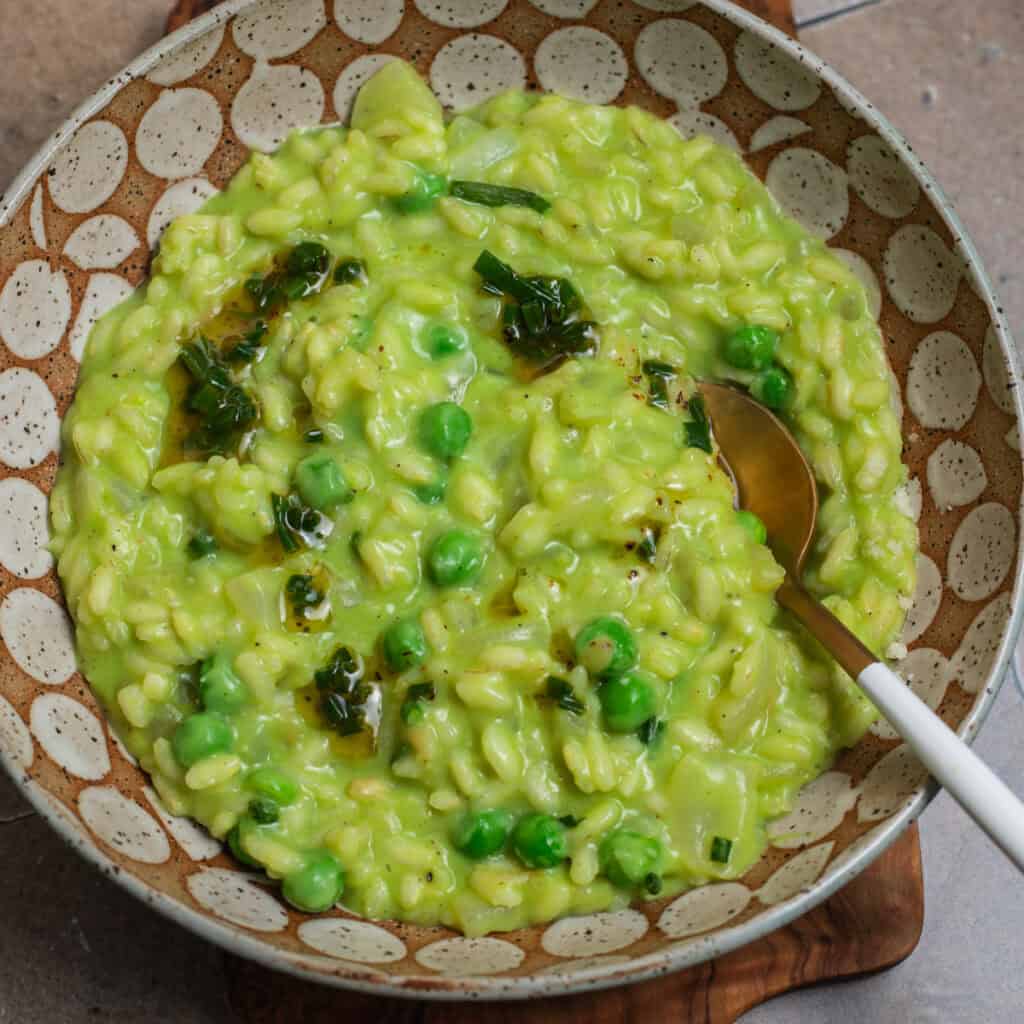
Pea Risotto with Chive Brown Butter
Equipment
Ingredients
- 2 tablespoons finely chopped chives, divided
- 4 tablespoons unsalted butter
- Salt and black pepper
- 1 onion, finely diced
- 4 cloves garlic, finely minced
- 1 cup risotto rice, preferably Carnaroli or Vialone Nano
- 2 cups shelled peas, divided, fresh or frozen
- 4 cups good-quality vegetable broth, like Better than Bouillon, see notes
- ½ cup dry white wine, such as Sauvignon Blanc or Pinot Grigio
- 1 ½ ounces Pecorino Romano Cheese, freshly grated, plus more for topping
Instructions
- Make the chive brown butter: In a small bowl, add 1 tablespoons finely chopped chives. In a wide saute pan, melt 4 tablespoons unsalted butter. Once melted, the butter will begin to foam and sizzle. Stir frequently, about 1 – 2 minutes, until the butter transforms from a pale golden to deep golden brown color, and begins to emit a nutty aroma. Once the sizzling sound subsides (it will get really quiet!) immediately remove from the heat and pour half the butter into the bowl of chives. Season with a pinch of salt and set aside.
- Saute the aromatics: Off the heat, add 1 onion (finely diced) and 4 cloves garlic (finely minced). Set over medium heat, and saute for 8 – 10 minutes, or until the onions are soft and translucent.
- Blanch the peas: Meanwhile, prep the peas. Fill a medium bowl with ice water, and set aside. Bring a large pot of salted water to boil, and add 1 ½ cups shelled peas. If using frozen peas, cook for 15 – 30 seconds, or until the peas defrost and turn bright green. For fresh peas, cook until tender, about 2 – 4 minutes. Immediately transfer the peas to the ice bath. Once chilled, drain, and transfer to a blender and set aside. Fill the large pot with 4 cups good-quality vegetable broth and keep at a simmer.
- Cook the risotto: To the pan, stir in 1 cup risotto rice, and toast for 1 – 2 minutes, or until the rice smells slightly nutty. Deglaze the pan with ½ cup dry white wine, scraping up any browned bits at the bottom of the pan with a wooden spoon. Once the wine no longer smells alcoholic, and the liquid has reduced to about half, add a ladle of hot broth to the pan. Vigorously stir the risotto, about once every 30 seconds to a minute, and simmer with a gentle bubble until the liquid has almost fully reduced.Repeat, adding a ladleful of broth and stirring every so often until the liquid is mostly absorbed before adding more, until the risotto is creamy and the rice is al dente, about 16 – 22 minutes. When al dente, the rice should be tender with a slight firmness in the center, not gritty or mushy.
- Blend: While the risotto cooks, blend the peas with ¼ cup water until very smooth. If the puree still seems chunky, add up to ¼ cup additional water.
- Finish: Once the rice is al dente, stir in the remaining ½ cups shelled peas until warmed through. Turn off the heat and stir in 1 ½ ounces Pecorino Romano Cheese (freshly grated) and the pea puree. At this point, the risotto should be creamy, but slightly looser than you'd like as it will continue to thicken as it cools. If it's too thick, loosen with a bit of water or stock. Season generously with salt and pepper and immediately transfer to serving bowls.Top each bowl with additional cheese (if desired), a drizzle of the chive brown butter, and the remaining 1 tablespoons finely chopped chives. Enjoy!
Notes
- Rice: Carnaroli and Vialone Nano are my favorite varieties of risotto rice, as they keep their texture well and are more forgiving, but Arborio will work too.
- Peas: Frozen vegetables, like frozen peas, are picked at peak ripeness, so they’re a great option here! Fresh peas will work well too.
- Better than Bouillon: If you’re not vegetarian, I recommend Better than Bouillon’s Roasted Chicken Base; otherwise, try the vegetarian No Chicken Base. These pastes add so much more flavor than a typical store-bought broth. I usually use 2 teaspoons for every 4 cups broth.
- For a little extra something, top with your favorite goat cheese.
- Try grilled asparagus or caramelized leeks for extra veggies
- Top risotto with a piece of pan-seared fish, shrimp, or scallops.
Nutrition
The nutritional information on this website is only an estimate and is provided for convenience and as a courtesy only. The accuracy of the nutritional information for any recipe on this site is not guaranteed.