


This bright and citrusy lemon pesto is a luxurious no-cook sauce made from fresh lemon zest, lemon juice, pine nuts, herbs, and plenty of cheese. Once you try this 20-minute recipe, you’ll want to spoon it on everything from pasta to white beans to grilled fish.
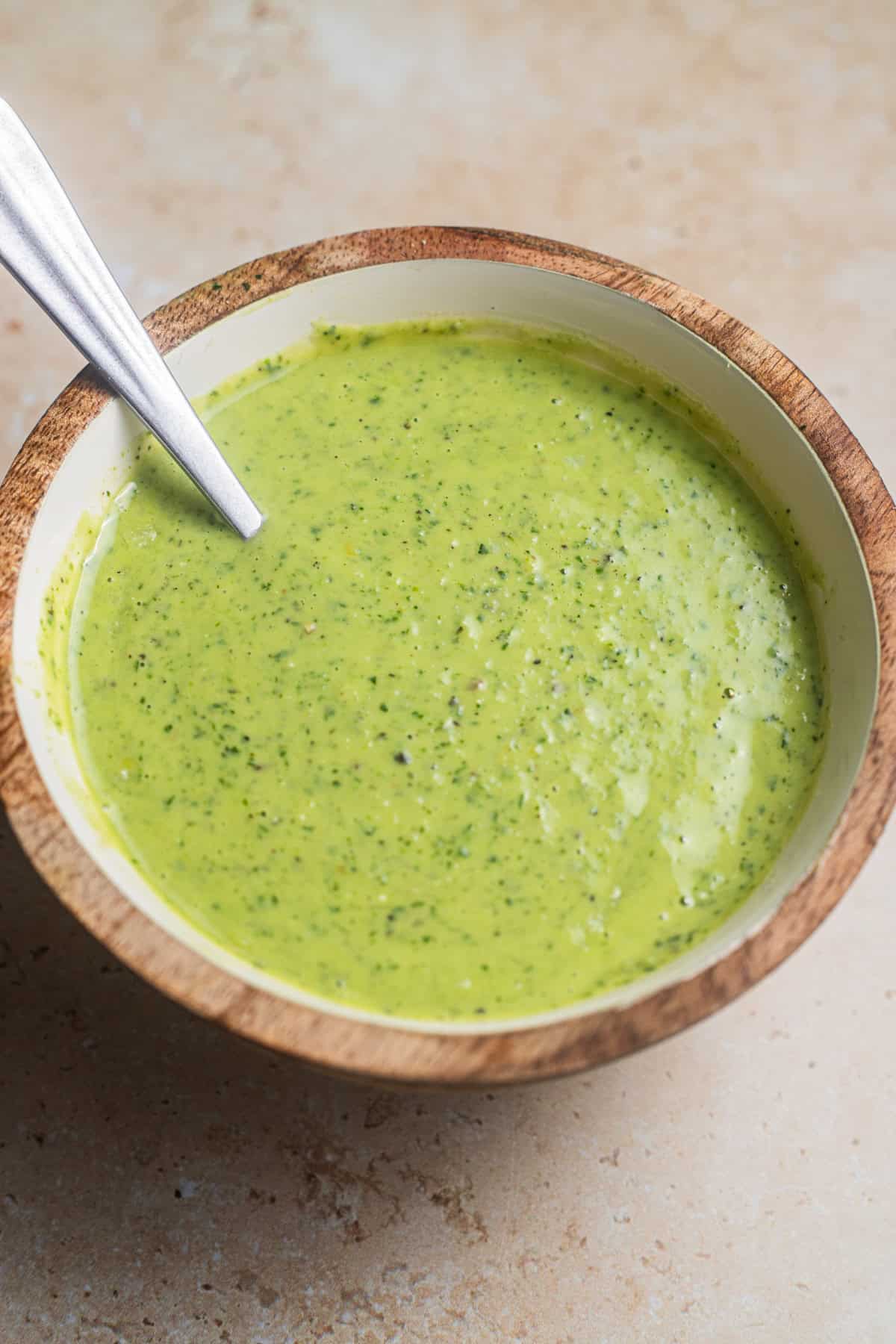
Lemon lovers, this one really is for you. It’s intensely aromatic and citrus-forward flavor that makes it irresistible. Though this pesto is texturally very similar to a classic basil pesto, the sauce contains lots of fresh lemon peel.
It’s fresh and tangy, with a little bit of bite from the intense citrus flavor. It has a nice, creamy texture (without adding any cream!), as the fresh lemon juice helps emulsify the sauce. Plus, it’s a totally pantry-friendly recipe!
Recipe Inspiration
Lemon pesto is a popular dish hailing from Procida, Italy, a small island off the coast of Naples. This dish is typically made with Procida lemons (or Amalfi lemons), both of which are sweeter, larger, and spongier than a typical lemon you might see in the US.
I researched several online recipes, including Pasta Grannies, Milk Street, and CiaoItalia, and then created my own version suited to my taste preferences. Additionally, because Italian lemons are difficult to find here, I altered the recipe to include enough sweetness to mimic the original.
Though Spaghetti al pesto di limone is the most traditional version of this dish (try my lemon pesto pasta!), you can serve it however you like.
Ingredient Notes

- Lemons: Because Procida and Amalfi lemons are difficult to find, I call for regular lemons. Meyer lemons are even better if you can find them, as they are a sweeter variety. However, these lemons tend to have a very delicate peel, so I recommend using Meyer lemon juice and regular lemon zest.
- Fresh Herbs: You can use any combination of soft herbs you like, such as basil, mint, or parsley. In the colder winter, I’ll use mint, but in the summer I like using fresh basil leaves.
- Sugar: Thanks to a tip from Christopher Kimball’s Milk Street recipe, a teaspoon of sugar brings the sweetness necessary to mimic the Procida-style pesto.
- Pine Nuts: Make sure to toast these to bring out their nutty flavor! Can’t find them? You can use toasted cashews or almonds in place of the pine nuts.
For a full list of ingredients and their quantities, please refer to the recipe card.
How to Make This Recipe

Step 1: Using a y-shaped peeler (or a standard vegetable peeler), peel the zest off the lemon in wide strips. Avoid the bitter white pith as much as you can.

Step 2: In the bowl of a food processor, add the lemon rinds along with pine nuts, a garlic clove, parmesan cheese, herbs, and black pepper.
Expert Tip
A food processor is a great way to quickly grate a block of parmesan cheese. Remove the rind and chop into ½-inch pieces. Pulse in a food processor in 3-second intervals until finely grated into a homogeneous texture.

Step 3: Pulse the mixture until a bright green paste begins to form. Add a bit of extra-virgin olive oil, and pulse to incorporate.
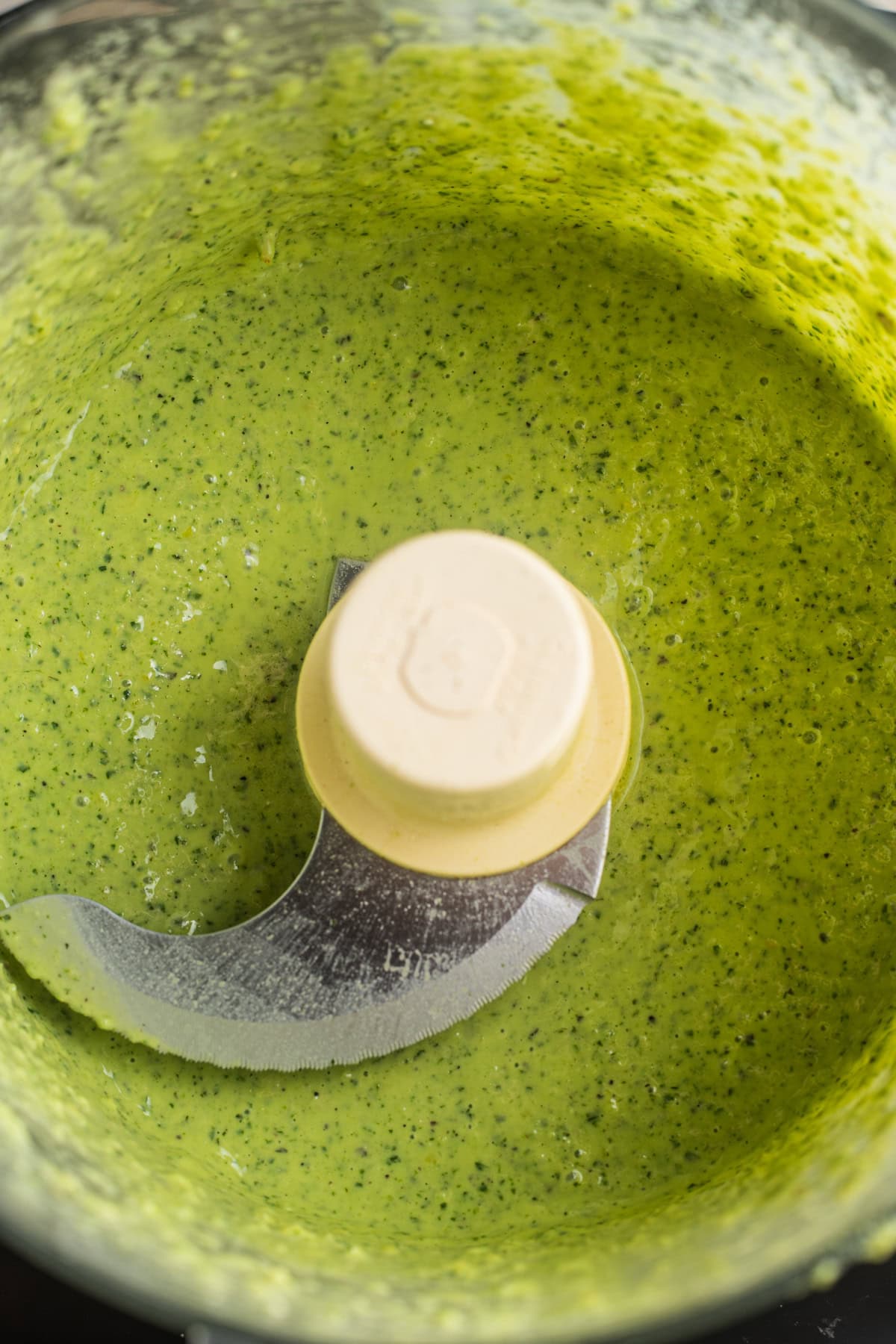
Step 4: Add 1 tablespoon of water, plus 1 – 3 tablespoons of fresh lemon juice (to taste), and pulse until a creamy mixture comes together. Season with kosher salt as needed.
How to Serve Lemon Pesto
- Pasta: This pesto makes a wonderful pasta sauce (see: my lemon pesto pasta), but homemade pici or potato gnocchi would be fun too!
- Beans: Enjoy with your favorite pot of beans, like these slow-cooked Italian white beans.
- Risotto: Serve with my white bean risotto or zucchini risotto.
- Fish: Top a little pesto on a roasted branzino or salmon filet!
Recipe FAQs
Everyone has a different tolerance for acidity, so you can adjust the amount of juice to your own preference:
1 tablespoon = subtle acidity
2 tablespoons = moderate level of acidity
3 tablespoons = strong level of acidity, for all of us lemon lovers!
Leftovers can be stored in an airtight container for 3 – 4 days in the fridge. I recommend topping the pesto with a thin layer of olive oil to reduce oxidation. Alternatively, freeze in an ice cube tray for 1 hour, then pop out the cubes and store in a Ziploc bag in the freezer for up to 1 month.
The pithy (white) part of the lemon is quite bitter, so make sure to avoid adding any pith to the pesto!
Did you try this recipe?
I would love to hear your feedback! Be sure to rate the recipe and leave a comment below.


Lemon Pesto (Creamy & Citrusy!)
Equipment
Ingredients
- 1 large lemon, about 170 grams
- 3 tablespoons pine nuts, toasted
- 1 cup grated parmigiano-reggiano cheese (loosely packed), grated with a microplane | plus more for garnish
- 1 clove garlic, peeled
- 1 cup loosely packed assorted fresh herbs, such as mint, parsley, or basil | tough stems removed
- 1 teaspoon granulated white sugar
- Salt and black pepper
- 3 tablespoons extra-virgin olive oil, plus more as needed
- 1 tablespoon water
Instructions
- Prep the lemon: Using a Y-shaped peeler (or a standard vegetable peeler), peel the zest off 1 large lemon in wide strips. Note: Be careful to avoid peeling the pith from the lemon, which is the bitter, white layer underneath the yellow peel. Juice the lemon and set aside; you should have about 2 – 3 tablespoons juice.
Make the Pesto:
- To the bowl of a food processor, add the lemon peels, 3 tablespoons pine nuts, 1 cup grated parmigiano-reggiano cheese (loosely packed), 1 clove garlic, peeled, 1 cup loosely packed assorted fresh herbs, 1 teaspoon granulated white sugar, and ½ teaspoon black pepper. Pulse until a bright green, chunky paste just begins to form, scraping the sides of the bowl with a flexible spatula to mix in any unincorporated bits.
- Slowly drizzle in 3 tablespoons extra-virgin olive oil, and pulse until incorporated.
- Add 1 tablespoon water and 1 tablespoon of the lemon juice. Pulse until a creamy and light green paste forms.Taste and adjust the pesto for seasoning, adding Salt and black pepper as needed. If desired, add 1 – 2 tablespoons of the remaining juice. Transfer to a small bowl and set aside. Note: To decide how much lemon juice you'd like, take a bite of the pesto. It should taste slightly less lemony than you'd like, because the acidity will build up over time. Make sure there's enough salt too, to balance out the tartness!
Video

Notes
Nutrition
The nutritional information on this website is only an estimate and is provided for convenience and as a courtesy only. The accuracy of the nutritional information for any recipe on this site is not guaranteed.


This lemon and mint pesto is delicious! May keep it simple and have it with linguine and peas
So so happy you like it! It’s really good with peas or sugar snap peas!
how many ounces will this lemon pesto?
Hi Alane, I haven’t measured the yield in ounces directly, but based on some back-of-the-napkin calculations, I believe it should be around 5-6 ounces.
Really delicious! I used a combination of cilantro, mint, and basil. Poured it over spaghetti noodles and served it with asparagus, and salmon. YUMMY!!!
Sounds wonderful! Thanks so much for leaving a comment 🙂
I just finished dinner with Lemon Pesto pasta! My husband and I enjoyed it very much; first time having the delightful dish!
Hi Joan, so glad you enjoyed! It’s one of my favorite ways to enjoy citrus, especially in the winter!
Author’s Note: I absolutely love this creamy, dreamy lemon pesto! It’s acidic, citrusy, and salty in an almost addicting way.