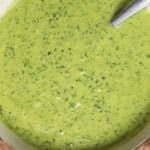
Lemon Pesto
This creamy and citrusy lemon pesto is a no-cook sauce made from fresh lemon zest, lemon juice, pine nuts, herbs, and plenty of cheese.
Servings: 0.75 cup
Calories: 356kcal
Equipment
Ingredients
- 1 large lemon about 6 ounces
- 3 tablespoons pine nuts toasted
- 1 cup grated parmigiano-reggiano cheese (loosely packed) grated with a microplane | plus more for garnish
- 1 clove garlic peeled
- 1 cup loosely packed assorted fresh herbs such as mint, parsley, or basil | tough stems removed
- 1 teaspoon granulated white sugar
- Salt and black pepper
- 3 tablespoons extra-virgin olive oil plus more as needed
- 1 tablespoon water
Instructions
- Prep the lemon: Using a Y-shaped peeler (or a standard vegetable peeler), peel the zest off 1 large lemon in wide strips. Note: Be careful to avoid peeling the pith from the lemon, which is the bitter, white layer underneath the yellow peel. Juice the lemon and set aside; you should have about 2 - 3 tablespoons juice.
Make the Pesto:
- To the bowl of a food processor, add the lemon peels, 3 tablespoons pine nuts, 1 cup grated parmigiano-reggiano cheese (loosely packed), 1 clove garlic, peeled, 1 cup loosely packed assorted fresh herbs, 1 teaspoon granulated white sugar, and ½ teaspoon black pepper. Pulse until a bright green, chunky paste just begins to form, scraping the sides of the bowl with a flexible spatula to mix in any unincorporated bits.
- Slowly drizzle in 3 tablespoons extra-virgin olive oil, and pulse until incorporated.
- Add 1 tablespoon water and 1 tablespoon of the lemon juice. Pulse until a creamy and light green paste forms.Taste and adjust the pesto for seasoning, adding Salt and black pepper as needed. If desired, add 1 - 2 tablespoons of the remaining juice. Transfer to a small bowl and set aside. Note: To decide how much lemon juice you'd like, take a bite of the pesto. It should taste slightly less lemony than you'd like, because the acidity will build up over time. Make sure there's enough salt too, to balance out the tartness!
Video
Notes
Sourcing Lemons: Traditionally, this pesto uses Procida or Amalfi lemons. These are difficult to find, so I've adapted the recipe to work with regular lemons. Meyer lemons are even better if you can find them, as they are a sweeter variety. However, these lemons tend to have a very delicate peel, so I recommend using Meyer lemon juice (omit the sugar) and regular lemon zest.
Storage: Leftover pesto lasts 3 - 4 days in the refrigerator in an airtight container; top with a thin layer of olive oil to reduce oxidation. Note that the flavors will continue to meld over time.
Nutrition
Serving: 0.25cup | Calories: 356kcal | Carbohydrates: 12g | Protein: 12g | Fat: 30g | Saturated Fat: 8g | Polyunsaturated Fat: 5g | Monounsaturated Fat: 14g | Cholesterol: 29mg | Sodium: 596mg | Potassium: 286mg | Fiber: 2g | Sugar: 3g | Vitamin A: 1984IU | Vitamin C: 46mg | Calcium: 335mg | Iron: 2mg
