

Kaju katli (or Kaju barfi) is a delightful cashew dessert topped with edible silver leaf, often enjoyed during Diwali, and is sure to impress all of your guests! It’s a labor of love, but the homemade kind beats store-bought any day.
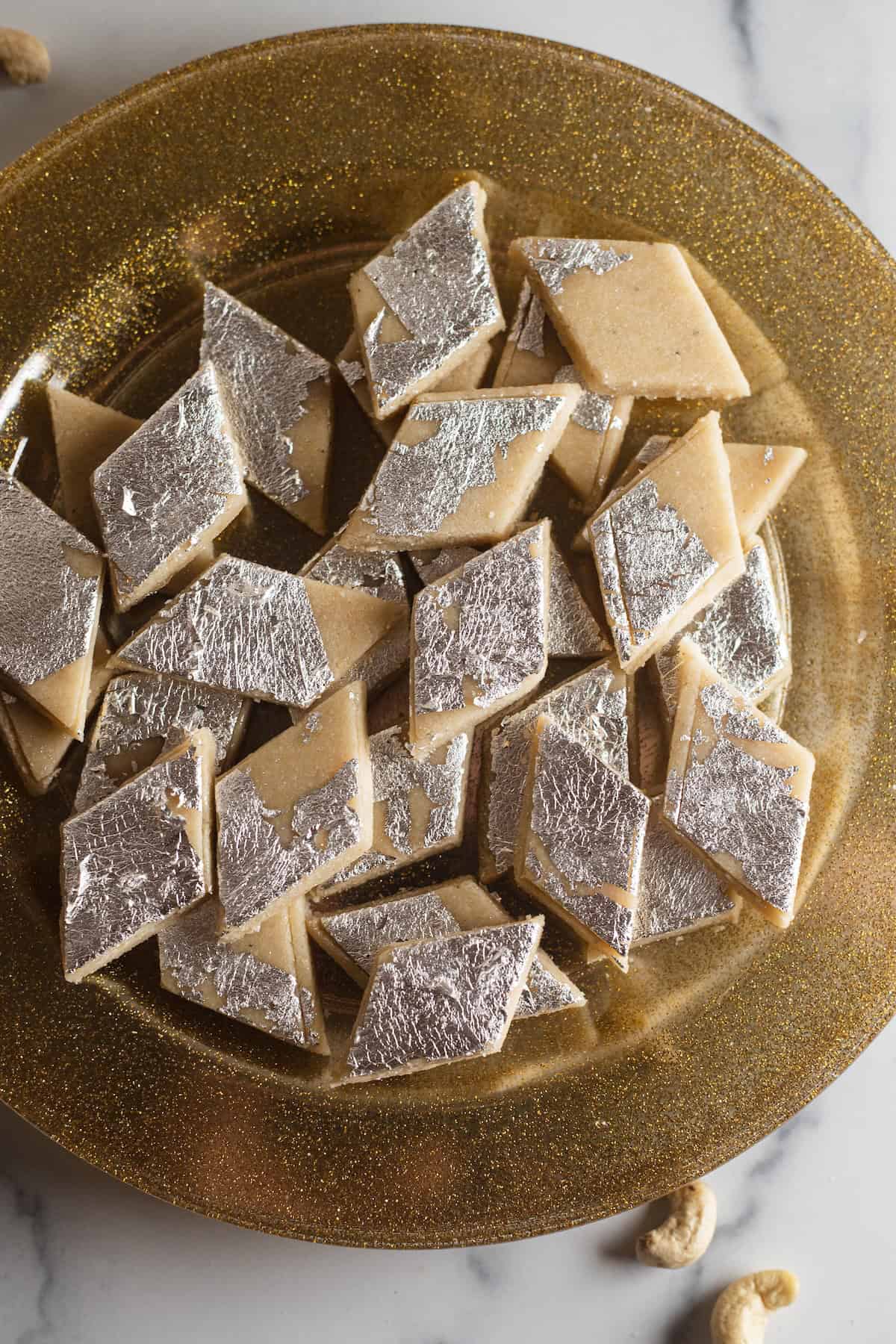
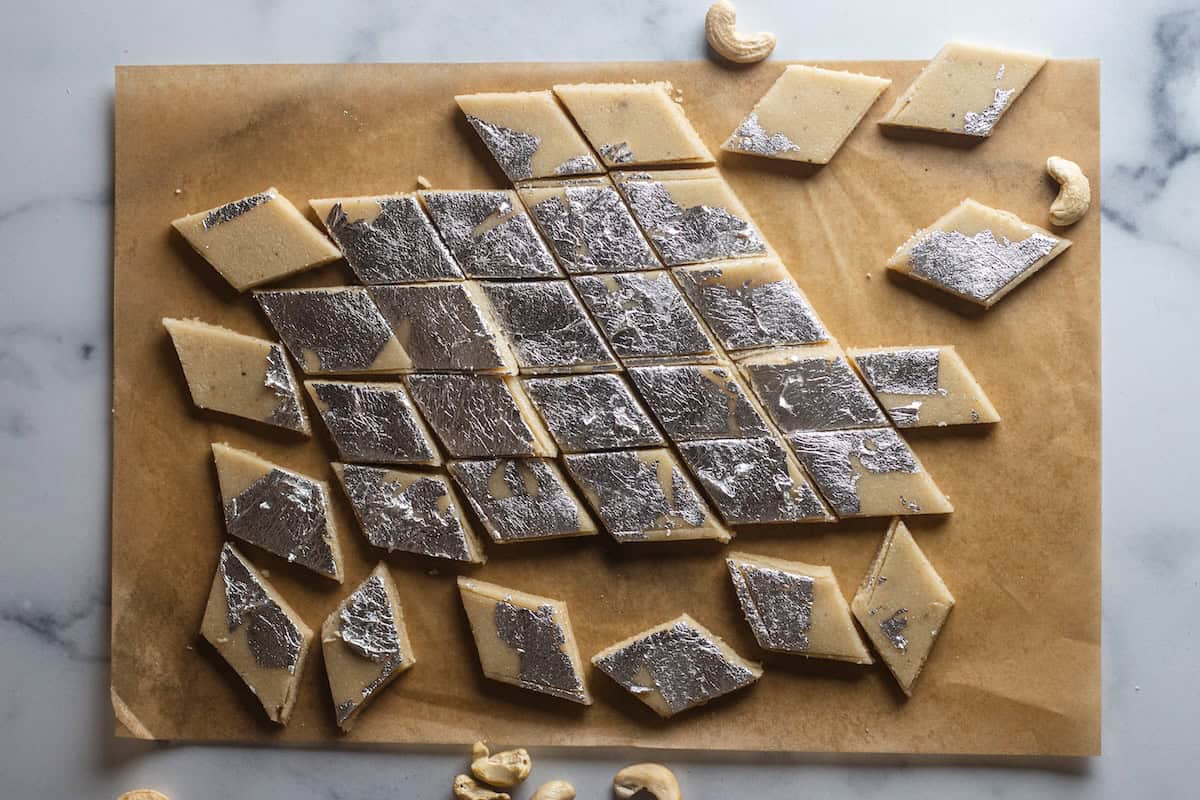
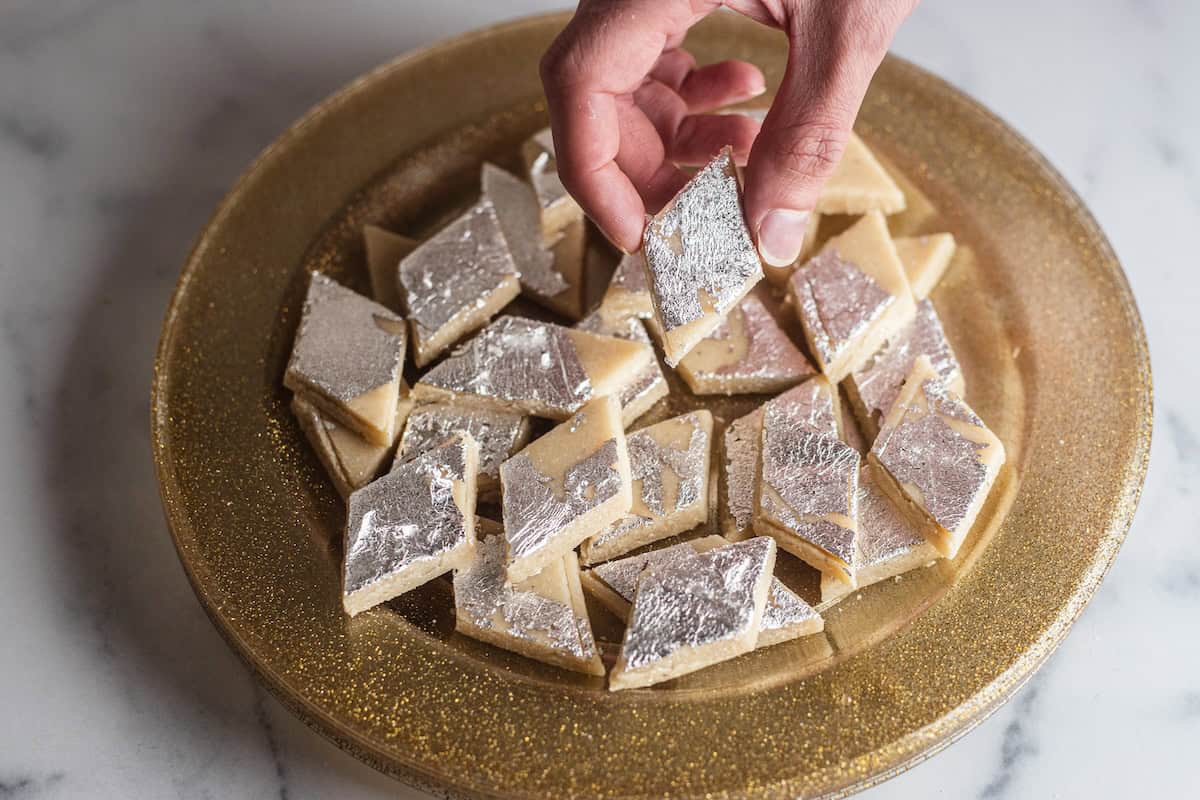
Kaju katli has a similar consistency to fudge, and is often served in small, diamond-shaped pieces, with a layer of edible silver leaf on top, known as vark. Every Diwali, my mom brought home a selection of sweets from the local Indian grocery store to serve along with a special meal, like mushroom biryani and butter paneer.
Upon seeing a box of kaju katli on the kitchen table, my eyes would widen with excitement. Its glimmery exterior, shaped like a diamond, reminds me of a lovely gemstone, and its soft, melt-in-your-mouth interior has just enough sweetness, with notes of rose water and cardamom. To this day, it remains one of my favorite desserts, so after many years of enjoying the store-bought version, I set out to make my own at home.
What is Vark?
- Vark (or varak) is a type of edible silver pounded down into thin sheets.
- You can find it at specialty Indian grocery stores or online—just make sure you’re purchasing the edible kind.
- When you purchase silver leaf, you will notice that the thin sheet of silver is sandwiched in between two thin sheets of paper, like a booklet. Carefully open up the booklet, and place your palm on the unexposed paper backing of the silver, then flip your hand directly onto the cashew dough. Try to do this as firmly as possible to prevent the silver from flaking.
- When applying the silver leaf, make sure to avoid directly touching it to your skin because it’ll easily stick.
How to Make This Recipe
Grind the Cashews:

Seal raw cashews in a Ziploc bag and freeze for about 15 minutes before transferring to a food processor (Image 1).
Pulse until the mixture resembles coarse breadcrumbs, scraping down the sides frequently. Continue pulsing in shorter intervals until the texture feels quite soft, sandy, and smooth (Images 2 & 3).
Transfer to a fine-mesh sieve set over a medium bowl (Image 4), and push the cashews through the sieve (Image 5).
TIP: If any large particles remain in the sieve, re-grind them for a couple of seconds and press through the sieve again until everything is smooth. This ensures an optimal texture!
Make the Dough:
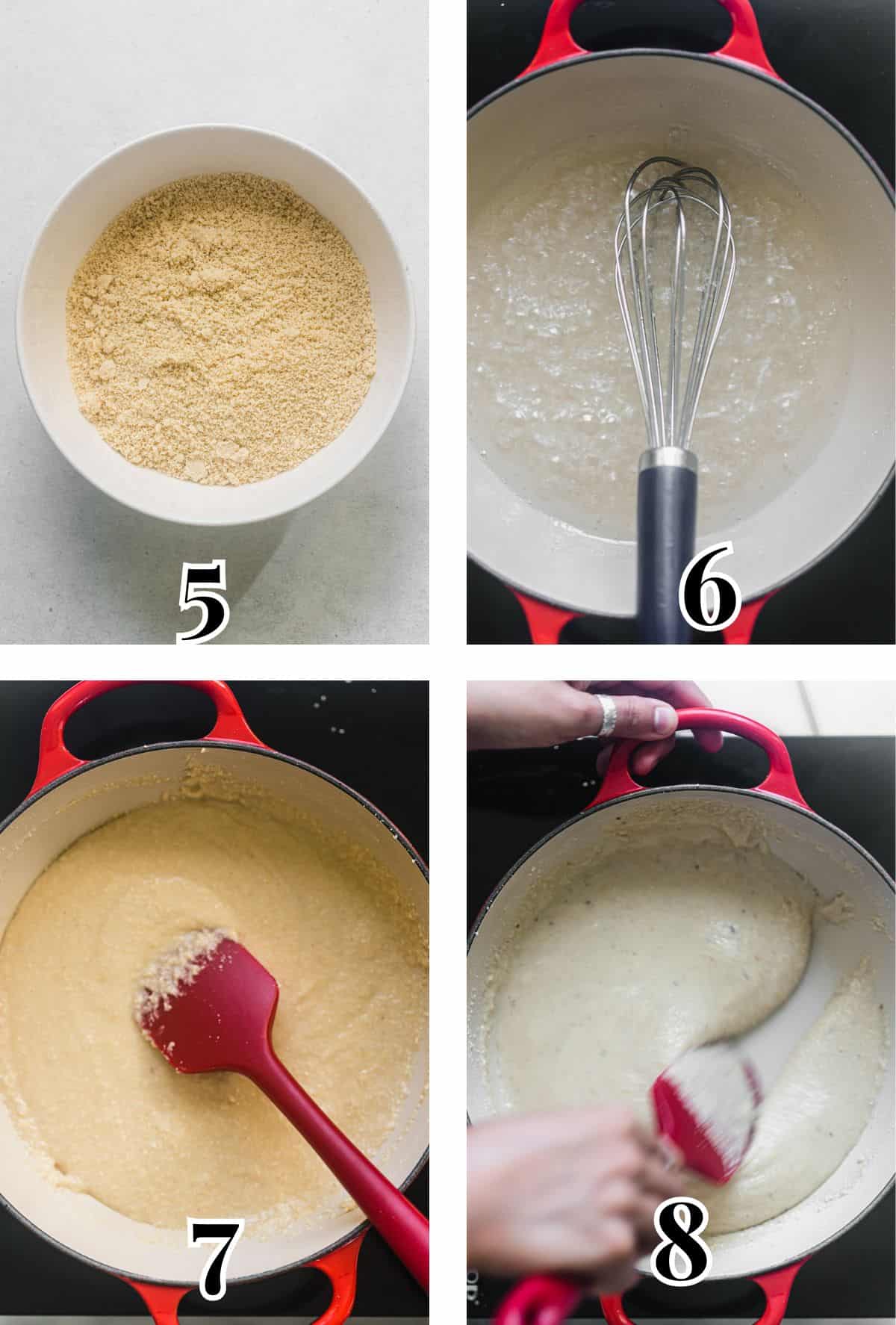
In a medium pan, combine sugar and water over high heat and stir constantly until the liquid comes to a boil. Place a candy thermometer in the pot, then continue to boil until the liquid temperature reaches between 230°F to 235°F (Image 6).
Over low heat, stir in the powdered cashews. Continue stirring for about 1 minute until slightly thickened (Image 7), then add the ghee, cardamom, and rose water (if using). Stir frequently with a spatula until the dough pulls away from the pan (Image 8).
TIP: To check if it’s done, scoop a small spoon of the dough and let cool for a minute. When cool enough to handle, try to form a ball with your hands—it should not stick at all. If sticky, continue to stir on the heat. If non-sticky, turn off the heat.
Scrape dough onto a piece of greased parchment (Image 9), then cool until it’s still warm but you can handle it without burning your hands.
Knead and Roll:
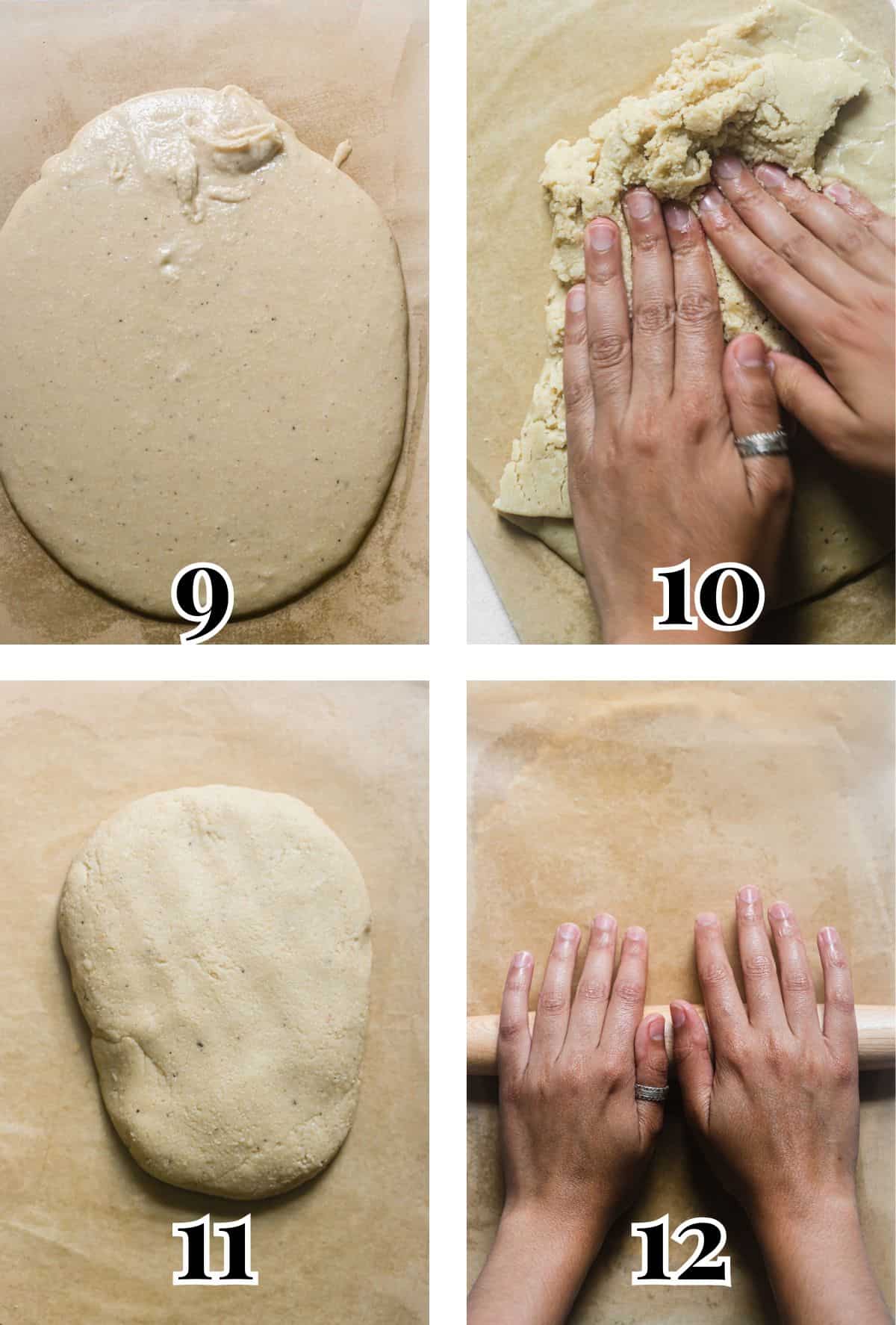
Grease your hands with a bit of oil, and knead the dough for a minute until smooth (Image 10). Form into an oval shape (Image 11), then place another greased sheet of parchment paper on top. Use a rolling pin to roll dough into ¼-inch thickness (Images 12 & 13).
Decorate and Cut:
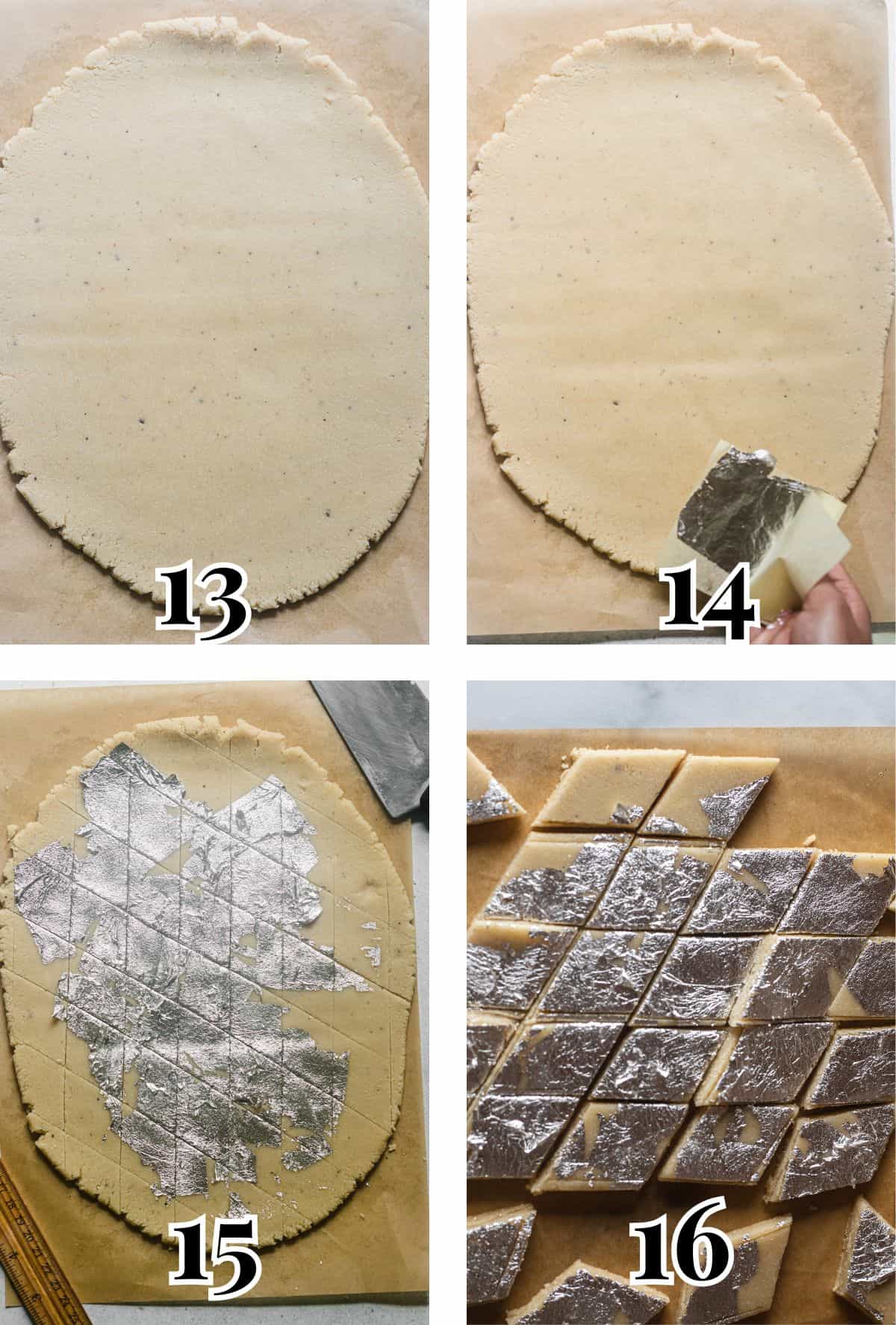
Apply the edible silver leaf by carefully opening up the booklet. Place your palm on the unexposed paper backing of the silver, then flip your hand directly onto the cashew dough (Image 14). Top with flaky salt (if desired), then cool completely before slicing into diamond shapes (Images 15 & 16). Enjoy!
Tips
- Freeze the nuts to mitigate the cashews from turning into cashew butter. You will want to grind them to a fine powder, but not over-grind them.
- Use a food processor or large spice grinder to grind the cashews and a medium or fine-mesh sieve to achieve a soft, fine texture. When in doubt, pulse at short intervals, checking frequently.
- When making the sugar syrup, a candy thermometer is helpful because you will want to heat the liquid between 230°F and 235°F. If the temperature rises above 235°F, the kaju katli will be too hard. If the syrup exceeds 235°F, you will need to make a new batch of sugar syrup.
Recipe FAQs
Try adding additional a teaspoon or two of ghee or water to moisten the dough as you knead it.
If the dough is too sticky, it will be difficult to work with and won’t firm up properly; if this happens, you can always put the dough back on the heat until it reaches the right consistency.
I recommend keeping kaju katli in the fridge up to 1 week or frozen for up to 6 weeks in an airtight container or sealed plastic bag. Let thaw at room temperature or serve chilled.
Technically, no! While it makes for a stunning presentation, it doesn’t add anything flavorwise.
Did you try this recipe?
I would love to hear your feedback! Be sure to rate the recipe and leave a comment below.

Kaju Katli
Equipment
- Food processor, or a large spice grinder
- Candy Thermometer
Ingredients
- 2 cups raw cashews
- 1 cup granulated white sugar
- ½ cup water, plus more if needed
- 1 teaspoon ghee or coconut oil, plus more for greasing
- ¼ teaspoon ground cardamom
- ¾ teaspoon edible rose water, optional
- Edible silver leaf, for coating
- Flaky finishing salt, optional
Instructions
Grind the Cashews:
- Seal 2 cups raw cashews in a zip top bag, then place in the freezer for 15 minutes.Add cashews to a food processor or large spice grinder. Depending on the size of your equipment, you may need to do this in batches. Pulse in 5-second intervals until mixture resembles coarse breadcrumbs, making sure to scrape down the bottom and sides frequently. Pulse in 1 – 2-second intervals until the mixture resembles a fine powder. It should feel soft and sandy, like the texture of almond flour.
- Set a sieve over a medium bowl. Pour the cashews into the sieve and press them with a spoon or your hands as needed. If any large particles remain in the sieve, re-grind them for a couple of seconds and press through the sieve again.Note: I know it might feel annoying to have to re-grind and re-sieve the cashew powder, but this is a critical step to ensuring the dough comes together into a smooth mass!
Make the Dough:
- Set a medium high-walled pan (preferably non-stick) over high heat. Add 1 cup granulated white sugar and ½ cup water, constantly stirring with a whisk until liquid comes to a boil, between 3 – 4 minutes. Place a candy thermometer in the pot, then continue to boil until the liquid temperature reaches between 230°F to 235°F, 2 – 4 minutes. To test doneness without a thermometer, dip the wooden spoon into the syrup and pull it out. The mixture should cling to the back of the spoon. Reduce the heat of the syrup to low and gradually stir in the powdered cashews with a rubber spatula. Keep stirring for 1 minute until slightly thickened, like the texture of cake batter. Mix in 1 teaspoon ghee or coconut oil, ¼ teaspoon ground cardamom, and ¾ teaspoon edible rose water (if using). Continue stirring frequently with a spatula until the dough fully pulls away from the sides of the pan, about 7 – 8 minutes.
- To check if it's done, scoop a small spoon of the dough and let cool for a minute. When cool enough to handle, try to form a ball with your hands—it should not stick at all. If sticky, continue to stir on the heat. If non-sticky, turn off the heat.
- Grease two pieces of parchment paper (at least 8.5 inches by 12 inches wide) or wax paper with ghee or coconut oil. Set one piece aside for later use. Scrape dough onto one piece of parchment. Let cool until you're able to handle it, 8 – 10 minutes. Mixture should still be warm to allow easy kneading.
Knead and Roll:
- Grease your hands lightly with ghee or coconut oil. Initially, the dough will be crumbly, but it will smooth out after kneading.Knead the dough for a minute—with the heel of your palm, push the dough away from you. Then fold the dough over itself and repeat until the dough is smooth.
- If the dough is still crumbly after kneading it, knead in 1 tablespoon of water at a time until the dough comes together without breaking apart. Continue kneading until the dough feels smooth and homogeneous.
- Form the dough into the shape of an oval. Place the other piece of greased parchment paper on top of dough. With a rolling pin, roll out the dough until it is about ¼-inch thick.
- Next, apply the edible silver leaf. Carefully open up the booklet, and place your palm on the unexposed paper backing of the silver, then flip your hand directly onto the dough. Repeat, applying as you like across the entire dough. Top with flaky salt if desired.
Cut and Cool:
- If the dough is still slightly warm to the touch, let cool until it is fully at room temperature before cutting.
- Using a sharp knife or pastry wheel, slice the dough horizontally into even strips. Then, cut diagonally across those strips to form diamond-shaped cookies. Each piece should measure roughly 2 inches across from point to point and about 1¼ inches across each of the four sides. Trim off any uneven edges of dough — feel free to snack on those separately (:Transfer the cookies to a parchment-lined baking sheet, spacing them slightly apart, then let cool to room temperature for at least 1 hour to fully firm up before serving.
Notes
Nutrition
The nutritional information on this website is only an estimate and is provided for convenience and as a courtesy only. The accuracy of the nutritional information for any recipe on this site is not guaranteed.



Owner’s Review: This recipe is a true labor of love, but when I first tasted it, it really blew the store-bought version out of the water! The most important thing is to make sure the cashew powder is *very* fine – that’ll ensure a smooth dough.