Fluffy Focaccia Recipe
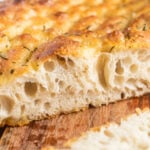
This fluffy focaccia dough recipe has a crispy, bubbly outer crust, a soft inner crumb, and a delicious flavor from an overnight rise in the fridge.
Servings: 12 servings
Calories: 203kcal
Equipment
Ingredients
- 600 g high-protein 00 flour or bread flour for 00 flour, I recommend Antimo Caputo
- 3.2 g instant yeast
- 18 g diamond-crystal kosher salt if using any other type of salt (Morton, Sea Salt, etc.) and measuring by volume, measure ½ of the volume listed.
- 450 g room temperature water
- 30 g extra-virgin olive oil plus more for dimpling and topping
Makes: 9 x 13inch rectangle
Instructions
- In a large bowl, combine 600 g high-protein 00 flour or bread flour, 3.2 g instant yeast, and 18 g diamond-crystal kosher salt using a wooden spoon.
- Make a well in the center of the bowl, and pour in 450 g room temperature water and 30 g extra-virgin olive oil. With a wooden spoon or your hands, slowly begin incorporating the dry ingredients into the wet ingredients.
- Continue mixing until fully incorporated and no dry bits remain, about 3 minutes. The dough will feel very wet and sticky.
- Cover the bowl with plastic wrap and allow the dough to rest, covered, for 20 minutes.
- Bulk Fermentation: Perform four sets of stretch and fold every 30 minutes over the course of 2 hours (see recipe post for visual demonstration). After each set of stretch stretch and fold, keep the dough covered with plastic wrap, allowing it to rest in between each set. If the dough feels too sticky, moisten your hands with water for easier stretching.
- At the end of the 2 hours, the dough should have risen slightly and shown some signs of bubbling/yeast activity. If it doesn't show any signs of activity, let sit at room temperature for another hour.
- Cover the bowl with plastic wrap, then chill in the fridge for a minimum of 24 hours up to 72 hours.
- After allowing the dough to ferment, remove the bowl from the fridge. Generously grease the entirety of your baking pan with at least 2 tablespoons of extra-virgin olive oil.
- Punch down the dough with your hands. Then, using a bench scraper or your hands, tilt the bowl and scrape the dough onto the oiled pan in one piece. Coat the dough with the oil from the pan on all sides. Ensure the smoother side of the dough remains face-up.
- Stretch the dough gently towards the edges of the pan. It will likely resist a lot of stretching initially. Stretch the dough approximately every 20 minutes until it stretches all the way to the corners of the pan, about 1 hour.TIP: I often place my hands on the underside of the dough to stretch, as I think it stretches more easily and evenly.
- Let dough rest, uncovered, for an additional 2 - 4 hours until it reaches room temperature, doubles in size, and appears quite bubbly. About an hour before the dough has fully risen, adjust the oven rack to the middle of the oven and preheat the oven to 500°F/260°C.
- Once the dough has risen, drizzle another 2 tablespoons of olive oil evenly over the top. Generously top with flaky sea salt (or kosher salt), and add any toppings.
- Moisten your hands with a bit of olive oil. Dimple the dough by gently pressing your fingers into the top of the dough.
- Bake in the oven for about 10 minutes until golden brown on top.
- Rotate the pan 180°, then reduce the heat to 450°F/232°C and bake for another 10 - 15 minutes until golden brown on the top and bottom. Note: To test if the bread is browned on the bottom, I remove it from the oven and use a metal spatula to carefully lift it up and check the coloring. As long as the pan is non-stick (or lined with parchment), it should lift up relatively easily. If you find the bottom is browning too quickly compared to the top, you can move the pan to a higher rack. If the top is browning too quickly, tent with foil. If both sides are browning too quickly, turn heat down to 425°F/218°C.
- Remove from the oven, then drizzle with a bit more olive oil (about 1 - 2 teaspoons).
- Cool for 10 minutes, then transfer focaccia to a cooling rack or cutting board to cool completely before slicing.
- Once cooled to room temperature, slice the bread as desired and enjoy!
Video
Notes
Flour: Choose a flour with a high protein content (at least 11%) for nice gluten formation. In a pinch, King Arthur all-purpose flour may be used.
Yeast: For a very bubbly focaccia, increase yeast amount by 50%.
Extra-virgin olive oil: A super premium olive oil isn't necessary for the dough itself. For dimpling and drizzling, feel free to use a nicer bottle.
Toppings: Coat toppings with oil or water before dimpling to prevent burning.
Tips:
- For best results, use a scale.
- For a crispier bottom, bake your focaccia directly on top of a preheated baking steel.
- Equipment: If you're using a pan that is less non-stick, make sure to put a bit more oil on the bottom and/or lay some parchment paper down.
- Storage: Focaccia is best enjoyed the same day it's made but will continue to taste fresh up to 3 days when stored in an airtight container or plastic bag.
- Leftovers: Leftover focaccia can be reheated, wrapped in foil in the oven, at 350°F/177°C, for 5 to 10 minutes until warmed through. You can make croutons by cutting up leftover focaccia into bite-sized cubes, tossing them with olive oil, salt, and pepper, and baking at 375°F for 6 to 10 minutes until crispy. I also make breadcrumbs by grinding the stale bread in a food processor.
Nutrition
Calories: 203kcal | Carbohydrates: 36g | Protein: 6g | Fat: 3g | Saturated Fat: 0.5g | Polyunsaturated Fat: 1g | Monounsaturated Fat: 2g | Sodium: 584mg | Potassium: 53mg | Fiber: 1g | Sugar: 0.2g | Vitamin A: 1IU | Vitamin C: 0.001mg | Calcium: 9mg | Iron: 0.5mg
