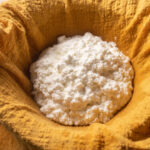
Whole Milk Ricotta Cheese
Creamy and rich ricotta cheese made with whole milk and heavy cream is easy to make it at home and super delicious.
Servings: 1.33 cups
Calories: 1055kcal
Equipment
- A large heavy-bottomed pot for making the ricotta a dutch oven or stock pot is great
- A large pot for collecting the whey such as a stock pot
- Cooking thermometer highly recommended
- Cheesecloth or an extra thin, slightly translucent t-shirt
Ingredients
- 4 cups whole milk avoid ultra-pasteurized as it can prevent curds from forming
- 1 cup heavy cream avoid ultra-pasteurized as it can prevent curds from forming
- ½ teaspoon kosher salt plus more if desired
- 2 tablespoons white distilled vinegar* or 3 tablespoons lemon juice | plus more if needed
Instructions
- Set a large heavy-bottomed pot with 4 cups whole milk, 1 cup heavy cream, and ½ teaspoon kosher salt over medium-high heat. Insert a cooking thermometer inside the pot to monitor the temperature.
- Heat the milk until it begins to steam at a very low simmer, about 185 °F to 190 °F; stir occasionally with a wooden spoon to prevent any scorching. You should see large amounts of small bubbles and foam over the surface of the milk. This could take anywhere from 10 - 20 minutes.
- Maintain the heat between 185 °F to 190 °F for 3 - 5 minutes, and continue stirring. If needed, lower the heat to maintain that temperature.Note: If desired, you can add more salt here to taste. Spoon a bit of the milk into a bowl, let it cool slightly, then taste to see if you want more salt.
- While stirring, slowly pour in 2 tablespoons vinegar or 3 tablespoons lemon juice until the mixture begins to curdle. You should see white clumps begin to form, with some more translucent liquid, or the whey, in the background. Immediately stop stirring, and remove from the heat.Note: If the mixture doesn’t curdle at all, keep stirring over the heat, then add 1 tablespoon of vinegar (or 1 teaspoon lemon juice) until it begins to separate. Continue adding an additional teaspoon of acid until separated. Then, immediately stop stirring and remove from the heat.
- Allow the mixture to sit for 10 minutes; it will continue to separate over time.Note: If the mixture still looks very milky, you can add another teaspoon of vinegar or lemon juice to the pot, and set it to medium heat. As the mixture heats, it should begin to curdle more. Remove from the heat once it curdles, then wait for another 10 minutes before proceeding to the next step.
- Meanwhile, set a fine mesh sieve over a large pot. Line the strainer with two layers of cheesecloth.
- Use a slotted spoon to scoop the solid curds from the pot into the cheesecloth.
- Let the ricotta drain in the cheesecloth to your desired consistency (5 - 10 minutes for soft ricotta or 20 - 30 minutes for firmer ricotta), then transfer to an airtight container in the fridge until ready to use. The leftover liquid, or the whey, can be discarded or saved for another use.
Video
Notes
*For a super milky flavor with extra-soft creamy curds, use 2 tablespoons of vinegar. For firmer, larger curds, use 3 tablespoons vinegar.
- Do not use ultra-pasteurized milk. Ultra-pasteurized milk has been heated to a high enough temperature to denature some of the milk proteins, meaning the milk will not coagulate properly. Regular pasteurized milk is totally fine, as is homogenized or non-homogenized milk.
- Whole milk is recommended. You can make ricotta with 2% milk (for a slightly less creamy texture), but anything lower and you will have a poor yield.
- Salt: The recipe uses just enough salt to bring out the flavors of the ricotta without feeling "salty" so that you can use this in sweet and savory applications. If desired, add more salt to taste.
- Lemon juice vs. vinegar: White distilled vinegar is slightly more acidic than lemon juice. Lemon juice has a stronger flavor. Depending on the use case, it might be nice to have additional notes of citrus (though you will need more lemon juice to curdle the milk). To keep things simple, just use vinegar.
- A cooking thermometer is highly recommended to maintain an optimal temperature. I've found that 185°F (85°C) to 190°F (88°C) is a good sweet spot, where you'll have a good yield of creamy, fluffy ricotta. If you end up a little above or below (195F or 180F), that's okay too. Where you start to affect things is when you're significant above or below that 185°F (85°C) mark.
- Storage: Store ricotta cheese in an airtight container for 4 to 5 days in the fridge.
- Leftover whey can be used in smoothies. You can also use it in place of water in many cases, such as cooking rice or other grains and potatoes.
Nutrition
Calories: 1055kcal | Carbohydrates: 39g | Protein: 29g | Fat: 88g | Saturated Fat: 55g | Polyunsaturated Fat: 4g | Monounsaturated Fat: 21g | Cholesterol: 290mg | Sodium: 1202mg | Potassium: 1272mg | Sugar: 41g | Vitamin A: 3819IU | Vitamin C: 1mg | Calcium: 1023mg | Iron: 0.2mg
