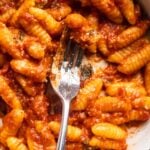
Malloreddus Recipe (Gnocchetti Sardi)
A step-by-step guide to making homemade malloreddus (gnocchetti sardi), or ridged hand-formed pasta from Sardinia, served in a comforting tomato butter sauce adapted from Marcella Hazan.
Servings: 4 servings
Calories: 468kcal
Equipment
- Scale a scale is necessary for this recipe for accurate measurements!
- Fine-mesh strainer
- 2 18-inch by 12-inch baking sheets or several smaller baking sheets
Ingredients
For the gnocchetti sardi (malloreddus):
- 160 grams water
- ¼ teaspoon saffron threads
- 318 grams semola rimacinata flour plus more as needed
- ¾ teaspoon kosher salt
- 1 ¼ teaspoons extra-virgin olive oil
For the tomato butter sauce:
- 28 oz canned, whole peeled tomatoes such as Bianco diNapoli or high-quality San Marzano tomatoes
- 5 tablespoons unsalted butter
- 1 onion halved and peeled
- ¼ cup fresh whole basil or parsley optional
- salt and black pepper
For serving:
- Extra-virgin olive oil for serving
- Parmigiano-reggiano cheese for garnish
Instructions
For the gnocchetti sardi (malloreddus):
- Place ¼ teaspoon saffron threads in a medium heatproof bowl and set aside.
- Bring 160 grams water to a boil in a medium pot over high heat. While waiting for the water to boil, set the bowl of saffron over a scale and 'tare' to 0. Once boiling, immediately pour the water into the bowl with the saffron and measure the amount of water. If it's less than 159g, add enough room temperature water until it's 159g of liquid total. Note: This step ensures you have the right ratio of water to flour for the dough. Cover the bowl, and steep for 10 minutes.
- Meanwhile, combine 318 grams semola rimacinata flour and ¾ teaspoon kosher salt in a large mixing bowl. Set a fine mesh strainer over the bowl.
- After the saffron steeps, pour the saffron water through the strainer into the bowl. Press down the saffron threads with your fingers to extract as much additional flavor as possible. Discard the threads.
- Add 1 ¼ teaspoons extra-virgin olive oil to the bowl. Knead the dough for 3 - 4 minutes, or until it comes together into a shaggy ball. The dough will feel rough, with wet and dry patches but hold together. Rest the dough for 10 minutes (this helps hydrate the dough). Then, knead the dough for 10 - 15 minutes, or until it feels very smooth, non-sticky, and no dry bits remain.
- Form the dough into a ball, then wrap tightly with plastic wrap and allow to rest at room temperature for 1 hour. Note: This resting time is critical, as it allows the dough to hydrate properly and relax the gluten.
- While the dough rests, prepare the tomato sauce below.
- After the 1-hour rest period, examine the dough. If it feels sticky at all, knead in 1 teaspoon of semolina at a time until no longer sticky. Line two large baking sheets with parchment paper. Dust the paper with semola flour.
- Working in pieces, slice a chunk of dough with a width of 1 ½ inches. Cover the remaining dough in plastic wrap to prevent it from drying out.
- On an unfloured wooden cutting board, use your hands to roll the chunk into a thin log with a ½-inch diameter.
- Slice the log into ½-inch pieces. Using the side of your thumb, roll each piece against a gnocchi board or the back of the tines of a fork, rolling and flicking the dough to make a curled shape on one side and a ridged surface on the other. Transfer the gnocchetti to the baking sheets, ensuring they don’t touch one another (otherwise they will stick). Note: As long as you cook the pasta within 2 hours of shaping them, you don’t need to cover the gnocchetti to prevent them from drying out.
- Repeat with the remaining dough, cutting it into chunks, then rolling each chunk into a log and forming individual gnocchetti.
For the tomato butter sauce:
- In a medium stock pot or Dutch oven, combine 28 oz canned, whole peeled tomatoes with their juices, 5 tablespoons unsalted butter, 1 onion, and ¼ cup fresh whole basil or parsley
- Bring to a simmer, then reduce to a low simmer for 30 - 45 minutes, stirring occasionally and crushing any whole tomatoes with a wooden spoon. The sauce should thicken and it shouldn’t be watery anymore. Season again with salt and pepper.
- When the sauce is done, discard the onion and herbs. Remove from the heat until ready to serve.
Cook and serve the gnocchi:
- Set a large pot of water over medium-high heat and bring to a simmer.
- Season generously with salt, then add the gnocchetti and simmer until they float to the surface, about 3 - 5 minutes. When done, they should taste al dente (but not raw) and float to the surface. When in doubt, cook for an additional minute or two as needed.Reserve 1 cup of pasta water for the sauce.
- Meanwhile, set the pot of tomato sauce over low heat to simmer.
- Remove the pasta with a slotted spoon and transfer to the pot with tomato sauce. Add a few tablespoons of pasta water to the pot, and simmer for 1 - 2 minutes until the sauce thickens and clings to the pasta. If needed, add more pasta water to loosen the sauce.
- Season again with salt and pepper and transfer pasta to serving bowls. Drizzle with extra-virgin olive oil and garnish with cheese. Serve hot.
Video
Notes
Recipe very slightly adjusted from Pasta by Hand by Jenn Louis
Tomato Butter Sauce Recipe adapted from Essentials of Italian Cooking by Marcella Hazan
Tips:
- Adjust for humidity: Making a good pasta dough requires observing the environment around you and making changes as needed. I always keep a small bowl of water beside me, so if I notice the dough feels dry as I’m kneading it, I wet my hands with the water to moisten the dough. This is especially helpful if you have trouble rolling rolling the dough into a rope; if it feels like there isn’t any friction, a bit of water can be helpful.
- Use a Bench Scraper: I find that my thumb gets tired VERY quickly when shaping these gnocchetti, so I’ll often switch to a bench scraper and drag the pasta across the gnocchi board with the scraper.
- Uncooked gnocchetti sardi can be refrigerated on the baking sheets covered with plastic wrap for up to 2 days. For long-term storage, freeze the pasta on the baking sheet for 1 hour, then transfer the pasta to an airtight container and freeze for up to 1 month. Do not thaw prior to cooking.
Nutrition
Calories: 468kcal | Carbohydrates: 68g | Protein: 12g | Fat: 17g | Saturated Fat: 9g | Polyunsaturated Fat: 1g | Monounsaturated Fat: 5g | Trans Fat: 1g | Cholesterol: 38mg | Sodium: 726mg | Potassium: 570mg | Fiber: 6g | Sugar: 6g | Vitamin A: 749IU | Vitamin C: 21mg | Calcium: 90mg | Iron: 6mg
