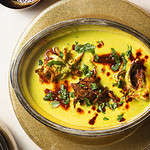
Kadhi Pakora Recipe (Punjabi-Inspired)
Inspired by the Punjabi version, this kadhi pakora recipe has a rich, tangy gravy made from yogurt and chickpea flour, topped with crispy pakoras (fritters).
Servings: 3 servings
Calories: 302kcal
Equipment
Ingredients
For the Kadhi:
- 1 cup full-fat plain yogurt left at room temperature for several hours*
- 3 tablespoons chickpea flour besan flour or garbanzo flour
- ¼ teaspoon ground turmeric
- ½ teaspoon granulated sugar
- 3 ¼ cups room temperature water divided
- 1 tablespoon neutral oil such as canola oil or peanut oil
- 1 teaspoon cumin seeds
- 1 ½ teaspoons minced serrano chili or a pinch of red chili flakes
- Salt and black pepper
For the Pakoras:
- 1 cup thinly sliced red onion from about 1 small onion
- ⅛ teaspoon ground turmeric
- ½ teaspoon garam masala
- ¼ teaspoon salt
- ¼ cup chickpea flour plus more if needed
- Neutral oil for frying | such as canola oil or peanut oil
- 1 tablespoon full-fat plain yogurt
- 1 tablespoon cold water plus more if needed
- Flaky salt for topping
Tadka Topping (optional, omit for a less spicy version):
- 1 tablespoon neutral oil such as canola oil or peanut oil
- ½ teaspoon mild red chili powder such as Kashmiri chili powder
To serve:
- Handful cilantro minced
- White rice or roti for serving
Instructions
- Blend the kadhi base: In a blender, blend 1 cup full-fat plain yogurt, 3 tablespoons chickpea flour, ¼ teaspoon ground turmeric, ½ teaspoon granulated sugar, and ¼ cup water until smooth and homogeneous. You don’t want any lumps here. Add another ¾ cup of water and blend until smooth. Set aside.
- Cook the aromatics: Set medium-sized, heavy-bottomed dutch oven or pot over medium heat. Add 1 teaspoon cumin seeds; once seeds begin to sizzle and release an aroma, add 1 ½ teaspoons minced serrano chili. Cook for 1 - 2 minutes until chilies are slightly softened. Take care not to burn the cumin seeds here, and reduce the heat if needed.
- Cook the kadhi: Reduce the heat to low, and add the remaining 2 ¼ cups of water to the pan. Whisk in the kadhi base, stirring constantly for 1 minute until fully combined. Continue whisking constantly, and increase the heat to medium-low; cook for 3 - 4 minutes until mixture begins to steam. Still whisking, increase the heat to medium-high, then continue stirring and cooking the mixture until it comes to a boil, about 7 - 8 minutes. Whisk the mixture for 1 minute, then reduce the heat to medium-low.At this point, you can stop stirring, and place a tall wooden spoon into the pot (this prevents the mixture from boiling over), and simmer for 15 - 20 minutes until the mixture is slightly thick and coats the back of the wooden spoon. Season with salt and pepper.
- Prep the pakoras: While the kadhi cooks, make the pakoras. In a medium bowl, mix 1 cup thinly sliced red onion, ⅛ teaspoon ground turmeric, ½ teaspoon garam masala, ¼ teaspoon salt, and ¼ cup chickpea flour until well combined. Let sit for 10 minutes to allow the onion to release any moisture.
- Fry the pakoras: Set a heavy-bottomed pot with 1-inch of oil over medium heat until it reaches 350°F/176°C.Add 1 tablespoon full-fat plain yogurt and 1 tablespoon cold water to the onion mixture and stir to coat. The mixture should be slightly sticky, and the onions should stick together when formed into a patty. If the mixture feels too dry, add a little bit of water. If the mixture feels too wet, add a little more chickpea flour to help bind it. When the oil is preheated, lightly pack about 3 - 4 tablespoons of the onion mixture to form a patty and carefully drop into the oil. Cook for about 1 - 2 minutes on each side, until nicely browned and cooked inside. Drain on paper towels or a cooling rack and sprinkle with flaky salt.
- Make the tadka topping: Set a small pot over medium heat with 1 tablespoon neutral oil. Add ½ teaspoon mild red chili powder, and once it begins to sizzle, immediately remove from the heat and stir in the red chili powder. Drizzle the topping all over the kadhi.
- Transfer the pakoras to the kadhi and serve immediately with fresh cilantro and a side of rice or roti.
Notes
* The yogurt must be at room temperature, both to prevent curdling and to ensure a sour taste. The sour flavors of the yogurt pair wonderfully with the earthy chickpea base. This is also a great way to use up yogurt that's about to go bad!
Yogurt curdles when heated unless it's stabilized (or emulsified) by other ingredients, namely, the chickpea flour. By blending the chickpea flour with the yogurt into a smooth texture that is slowly heated, you create a creamy, thickened emulsion.
Use Room Temperature Ingredients. Using room temperature ingredients will minimize any risk of curdling.
Heat the Mixture Slowly, Whisking Constantly. For the smoothest, creamiest kadhi, slowly heat the mixture and whisk constantly until it comes to a boil. Continue whisking for 1 minute, then simmer for a good 15 - 20 minutes. Once the mixture has boiled for 1 minute, you're in the clear and you don't need to keep whisking constantly during the simmering process!
Storage: Leftover kadhi will last 2 - 3 days stored in an airtight container in the fridge.
Reheating: You can easily reheat the kadhi (curry) on the stovetop until warmed through, adding a bit of water as needed to loosen the mixture, and whisking frequently to prevent any curdling.
Nutrition
Calories: 302kcal | Carbohydrates: 36g | Protein: 9g | Fat: 14g | Saturated Fat: 3g | Polyunsaturated Fat: 3g | Monounsaturated Fat: 7g | Trans Fat: 0.04g | Cholesterol: 11mg | Sodium: 268mg | Potassium: 409mg | Fiber: 3g | Sugar: 9g | Vitamin A: 212IU | Vitamin C: 5mg | Calcium: 148mg | Iron: 2mg
