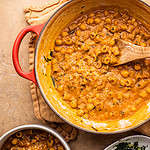
Creamy Gochujang Pasta e Ceci
Creamy gochujang pasta e ceci has hints of gochujang, soft chickpeas, garlic, rosemary, and onion simmering in a rustic, creamy, brothy stew.
Servings: 2 generous servings
Calories: 729kcal
Equipment
- Immersion blender or stand blender
Ingredients
- 15 ounces canned chickpeas do not discard the liquid
- ¼ cup extra-virgin olive oil divided
- 3 cloves garlic finely minced and divided
- 1 sprig fresh rosemary
- 1 small yellow onion finely diced
- Salt and black pepper
- 1 ½ to 2 teaspoons mild gochujang paste*
- 1 tablespoon tomato paste
- 2 to 3 cups vegetable broth or chicken stock
- 4 ounces small dried pasta such as ditalini, pastina, or maltagliati
- 2 tablespoons minced flat-leaf parsley
- ¼ cup grated pecorino romano cheese plus more for topping
Instructions
- Puree the chickpea broth: Open 15 ounces canned chickpeas and pour all of the chickpea liquid into a blender cup along with half of the chickpeas (you'll use the other half later on). Puree with an immersion blender until smooth and set aside.Note: You can also use a regular stand blender to puree the mixture!
- Saute the aromatics: To a medium dutch oven or stock pot, add 3 tablespoons of extra-virgin olive oil, ⅔ of the minced garlic, and 1 sprig fresh rosemary. Set over medium heat, and saute for 2 - 3 minutes until garlic is fragrant and soft.Add 1 small yellow onion, finely chopped, and saute for 7 - 8 minutes over medium-low heat until soft and translucent. Season with a big pinch of salt and black pepper.Note: Be careful with adding too much salt here if you are using Better Than Bouillon (which is already well seasoned).
- Cook the pastes: Stir in 1 ½ teaspoons gochujang paste and 1 tablespoon tomato paste. Saute for 2 - 3 minutes, or until the tomato paste transforms from bright red to brick red and the oil begins to separate.
- Saute the chickpeas: Add the remaining half of the chickpeas to the pot, and saute for 2 - 3 minutes until they’re well-coated in the tomato-gochujang paste.
- Simmer the liquids: Add the chickpea broth and 2 cups vegetable stock to the pot, and use a wooden spoon to scrape up any bits stuck to the bottom of the pan. Season to taste with salt and black pepper.Bring the mixture to a boil, then reduce the heat to a vigorous simmer (you should see lots of small bubbles and occasional large bubbles breaking the surface of the liquid). Simmer the broth for 10 minutes, stirring occasionally and scraping down the sides of the pan.
- Cook the pasta: Taste and season the broth once more. It should be well-salted and a bit spicy. If you'd like more heat, add another ½ teaspoon of gochujang paste.Add 4 ounces small dried pasta to the pot, and stir to combine. Continue vigorously simmering until the pasta is al dente and the broth has thickened into a stewy texture; stir occasionally. This could take anywhere from 5 - 10 minutes, depending on the pasta you chose so be sure to consult your package directions for exact timing.If the soup has thickened too much, add in up to 1 cup more vegetable broth.
- Make the parsley oil: While the pasta cooks, prepare the oil. In a small bowl, combine 2 tablespoons minced flat-leaf parsley and the remaining garlic clove. Season with a pinch of salt and pepper.
- In a small pan, heat the remaining 1 tablespoon of olive oil until it shimmers. Immediately pour the hot oil over the parsley-garlic mixture and stir together with a small spoon. Set aside.
- Serve: Remove the pasta e ceci from the heat and discard the rosemary stem. Stir in ¼ cup grated pecorino romano cheese and half of the parsley-garlic oil.Taste again, and adjust seasoning as needed. It should taste creamy, well-salted, with a bit of a kick from the gochujang paste and the garlic. Texturally, it will be quite stew-like, with a thickened broth. If you like it spicier, you can add a bit more gochujang. Divide the stew amongst serving bowls and top with a bit more cheese and the parsley-garlic oil. Serve warm.
Notes
* Some gochujang pastes are labeled with different levels of heat. I used 2 teaspoons of a mild gochujang paste for a nicely spiced stew that's not too spicy but brings some heat. If your paste does not have a label, start with 1 ½ teaspoons, as the recipe indicates, and adjust as needed.
Don't want to use aquafaba (chickpea liquid in the can)? Here are two suggestions:
1) Make your own chickpea broth. For a weekend project, cook up some dried beans in water to make your own broth. Then proceed with the recipe as is.
2) Sub the chickpea liquid for more vegetable broth: If you're just trying to get dinner on the table, you may not have the time to make your own chickpea broth. Instead, blend half of the drained chickpeas with ½ cup of additional broth.
Veganize it: The only non-vegan ingredient is the cheese, and you can definitely omit it or just use a vegan parm.
What should the consistency of this stew be? This is totally dependent on your preference and the pasta you use! A fresh pasta will be starchier, and therefore more stew-like. Ditalini is going to be more soupy. You can always add more liquid to thin out the stew to your desired consistency.
Nutrition
Calories: 729kcal | Carbohydrates: 82g | Protein: 23g | Fat: 36g | Saturated Fat: 6g | Polyunsaturated Fat: 5g | Monounsaturated Fat: 22g | Cholesterol: 13mg | Sodium: 1753mg | Potassium: 630mg | Fiber: 12g | Sugar: 6g | Vitamin A: 1053IU | Vitamin C: 12mg | Calcium: 245mg | Iron: 4mg
